

Game-Improvement vs. Players-Distance Irons
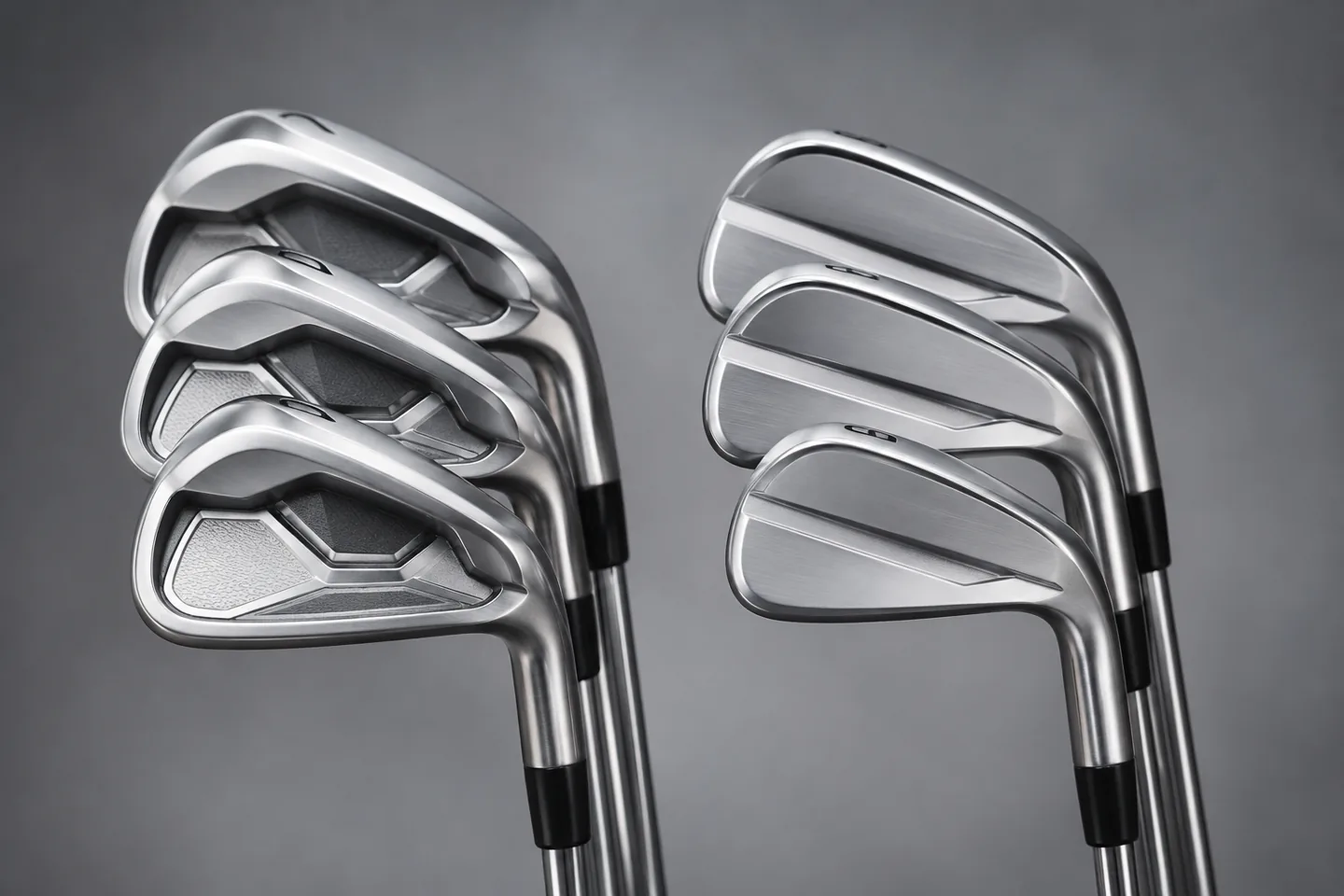
Shopping for irons gets confusing around the middle of the handicap range. A golfer who has outgrown a bulky beginner set may still have trouble striking a traditional compact iron. Players-distance models occupy much of the territory between those two designs.
The trouble with category names is that they aren't engineering standards. A manufacturer decides where its models fit. The useful comparison begins with the heads themselves and the shots they produce.
Look behind the face
Game-improvement irons commonly have a broad sole, substantial perimeter weighting, a larger face and visible offset. Examples include the PING G430 family. These features aim to retain useful performance across a wider area of the face and help golfers produce adequate launch.
Players-distance irons frequently use a more compact shape and a thin face supported by a hollow body or other internal construction. The TaylorMade P790 and Titleist T200 are recognizable examples of the category, though their specific designs differ by generation.
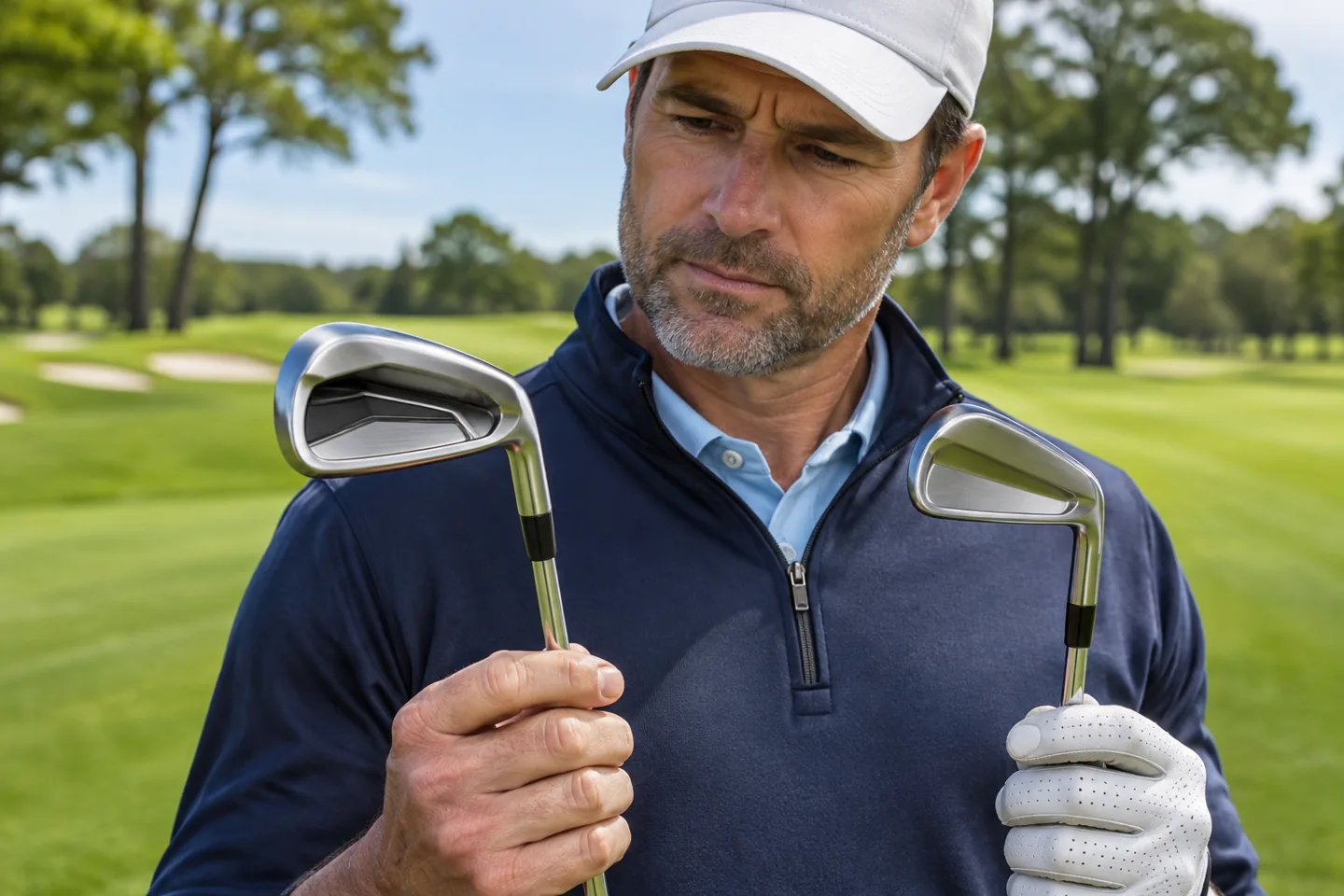
A hollow club is not necessarily forgiving everywhere on the face. Ask to see what happens on a low-face strike and one slightly toward the toe.
The seven-iron comparison that misleads shoppers
Suppose your current seven-iron carries 150 yards and a demonstration club carries 165. Before calling it an upgrade, look up both lofts. A modern distance-oriented seven-iron may have considerably less loft than an older traditional model.
The extra distance isn't meaningless. It could be useful if the shot still reaches a playable height and stops on the green. Just remember that the number stamped on the sole doesn't establish an equivalent loft.
The next question concerns the bottom of the bag. Replacing your irons with a stronger-lofted set might create an awkward gap between the pitching wedge and your existing sand or gap wedge. Measure the full set.
Examine the sole from the ground
Wide soles distribute contact with the turf over a larger area. For some players, especially those who tend to dig, this makes a wide-soled iron comfortable on softer ground.
Other golfers prefer a narrower sole when striking from firm, tight lies. Sole width alone doesn't predict the result. Leading-edge shape, camber, effective bounce and the player's angle of attack are relevant.
If you normally play a firm public course in summer, try the demonstration iron outdoors. A rubber mat won't reproduce every aspect of club interaction with turf.

Look at where the club enters the ground. Notice the depth of the divot and whether the head feels as though it is digging or moving cleanly through the grass.
What forgiveness looks like in a fitting
A golfer who hits a seven-iron 160 yards from the middle but loses twenty yards on a slight toe strike has a different problem from a golfer whose misses all finish ten yards right.
The first player ought to investigate ball-speed retention across the face. The second should examine face delivery, strike pattern and fit, including lie angle.
Hit a series of ordinary shots. Use the same ball with each club. Keep a representative selection of imperfect swings so that the comparison reflects your game.
Ask the fitter to display carry distances as individual shots rather than just an average. A group of shots between 151 and 159 yards is a different approach-club proposition from a group between 140 and 170, even when the averages are similar.
Can these irons hold a green?
At most clubs, the front of a green is a much safer place to miss than twenty yards beyond it. A distance iron that produces some very long approaches with low spin deserves careful attention.
Peak height and landing angle help explain how a ball will arrive. Spin contributes to stopping performance, too. The combination matters more than any isolated number, especially when you're comparing clubs with substantially different lofts.
Golfers with modest swing speeds should test their longest intended iron before ordering a full set. A five-iron that travels almost the same carry distance as a six-iron might be an expensive occupant of the bag. A more suitable hybrid could solve the problem; the hybrid and long iron comparison explains that decision in more detail.
Buying a mixed set
A mixed set can be an attractive solution for golfers who strike their short irons well and lose consistency as the loft decreases. A more forgiving construction in the long irons lets the player retain a smaller head shape for scoring clubs.
Start the discussion with the actual transition club. If the six-iron is the troublemaker, compare the two available six-irons and then measure the gaps to the five and seven. Different models can have different lofts, offsets, shaft weights and lengths.
Don't order a combination based entirely on the appearance of the heads. The transition must make sense in the air.
A sensible shopping decision
Bring your current seven-iron and longest unreliable iron to your fitting. They establish a baseline and give the fitter two useful problems to investigate.
If you prefer the appearance of a compact head but score better with the larger head, spend some time hitting the larger one. You may find the appearance quickly becomes familiar.
Likewise, a player who consistently strikes a smaller iron and likes its turf interaction has no obligation to choose the largest available design because of a handicap label.
Buy the set that gives you dependable approach distances and a manageable miss. Leave enough room in the budget for any necessary wedge or hybrid changes.