

How to Choose the Right Wedge Bounce and Grind
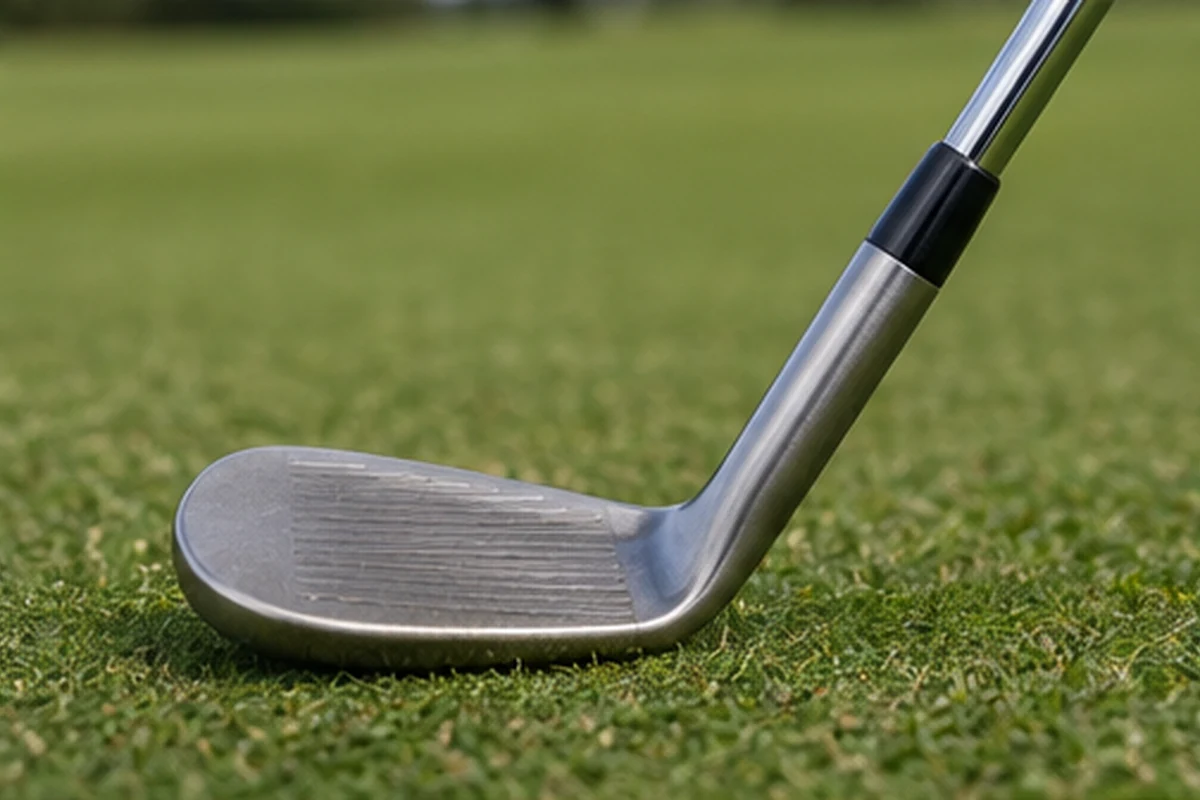
A sand wedge has to do something that most other golf clubs are deliberately designed to avoid: hit the ground before the ball and still deliver a useful shot. In a normal greenside bunker, the club enters the sand behind the ball, moves underneath it and throws sand forward. The ball comes out with that sand. If the club buries itself instead, the ball often stays precisely where nobody wants it.
The shape of the underside of a wedge is therefore a surprisingly important part of buying one. It isn't nearly as glamorous as a new face finish or a set of freshly machined grooves, but it has a great deal to do with whether the club survives the first inch of the shot.
Put the club on a table
Take a wedge and hold it in its normal address position on a flat surface. Look at it sideways, with your eyes level with the sole. On many wedges you will see a small space below the front edge of the clubface. The sole contacts the surface farther back. That geometry is related to bounce.
The measured bounce angle describes the relationship between the leading edge and the lower portion of the sole. A larger angle, all else being equal, gives the head more resistance to digging. A smaller angle usually lets the leading edge sit nearer the ground.
The grind is the actual shaping of that sole. A maker might remove material from the heel, toe or trailing edge, alter the width of the sole or change its curvature. Two wedges marked 10 degrees can have substantially different ground interaction. One might have a broad, relatively uninterrupted sole. Another could have a narrow effective contact area and considerable heel relief so the face can be opened without lifting the leading edge excessively.
It helps to think of a shovel. A broad blade moving through soft ground behaves differently from a narrow blade. The shape matters as much as the angle at which you hold it. Golf wedges are more complicated, of course, but the principle makes the catalogue of available soles a little less mysterious.
Three situations you probably recognize
The wet fairway. It rained overnight and the closely mown grass is sitting on soft soil. You have 35 yards to the hole. The club enters the ground fractionally early and a substantial divot comes out before the ball has gone anywhere. If this is a familiar pattern, try a wedge with more effective bounce and a sole that supports the head through impact. A wider sole can help, especially for a player whose downward strike tends to make deep divots. The club still needs to arrive with a sensible low point; a different sole will not fix a swing that repeatedly hits several inches behind the ball.
The compacted bunker. A thin layer of damp sand covers a hard base. Your normal explosion technique produces a club that glances off the surface and catches the ball near its equator. This situation calls for a different approach from a bunker full of loose, deep sand. A less aggressive sole profile or less exposed bounce can make it easier to enter the shallow layer. You may also need to adjust how far you open the face and how much sand you attempt to move. Don't apply the same wide-open setup automatically in every bunker.
The summer tight lie. The ball is resting on very short, firm turf. There is no grass underneath it to provide a cushion. A wedge with a leading edge that sits reasonably close to the surface can be useful, particularly if the shot requires an open face. The temptation here is to buy the lowest bounce available. That's not necessarily wise. A low-bounce head delivered steeply with too much forward shaft lean can dig into even fairly firm ground. Test the actual shot before deciding.

Which bounce numbers should you try?
The industry's terminology varies a little. In Vokey's published fitting guidance, low bounce generally falls around four to six degrees, medium bounce around seven to ten, with higher-bounce options above that general range. Those categories are a starting point for shopping, not an exact description of how every head will behave. A broad-soled wedge with a moderate stamped bounce can resist digging better than a narrow-soled wedge with a larger number.
If you're a golfer who plays a conventional course, encounters a variety of turf conditions and is purchasing a first specialty sand wedge, a medium-bounce option is a sensible initial appointment at the fitting shop. Include a higher-bounce model in the comparison if you take substantial divots or normally play soft ground. Include a lower-bounce or relieved-sole option if the usual courses are exceptionally firm and you tend to sweep the ball away with little turf disturbance.
Don't assume your entire wedge set needs to match. A gap wedge used predominantly for 90-yard approaches has a straightforward job. Consistent interaction on square-faced shots is worth more than extreme versatility. The highest-lofted wedge might see plenty of open-faced pitches, awkward lies and shots over bunkers. It has a different job, and its sole can reflect that.
What happens when you manipulate the face
Opening a conventional wedge generally exposes more bounce and raises its leading edge. That is useful in fluffy sand, where the extra exposed sole can help the club move through the material. From a close-cut lie, however, the raised edge can make clean contact harder.
A heel-relieved grind removes some of the material that would otherwise hold the leading edge up when the club is opened. This allows the player to vary the face orientation while controlling how it rests on the ground. Trailing-edge relief can reduce the portion of the sole contacting the ground in particular positions. Neither feature produces a free advantage in every situation. Removing support can make a club less forgiving for a golfer who depends on a broad sole to resist digging.
Forward shaft lean has its own effect. When the hands move well ahead of the clubhead, the delivered loft and effective bounce generally decrease. A wedge marked with plenty of bounce may therefore behave quite differently in the hands of two players. Watch how you actually pitch rather than how you imagine you pitch.

A fitting worth paying for
A full-swing wedge session on an indoor mat is useful when the question is distance gapping. It is a poor substitute for finding out whether a particular grind works from wet grass or sand. A mat can allow a club that has struck behind the ball to skid into it with a surprisingly respectable outcome. Real turf might produce a very different result.
Ask to test from grass and, if available, an actual practice bunker. Bring your current wedge. Hit a group of stock pitches with each candidate before moving to the awkward shots that you encounter commonly. Use the same model of ball throughout and avoid comparing clean, dry shots with attempts made using a wet clubface.
After a handful of pitches, examine the turf. How far behind the ball did the club enter? Is the divot deeper with one sole? Does another head tend to skip into the ball when the surface is firm? Have a fitter check whether the strike pattern on the face is moving higher or lower as you change models. Those details often explain why one wedge feels so much easier to use than another.
Now go to the bunker. Try ordinary square or slightly open setups before attempting the spectacular high shot. If you routinely leave bunker shots in the sand, the wedge that gets the ball out consistently deserves serious attention. It doesn't matter if another club produces a prettier result when you catch it perfectly.
Buying without a fitting
Anyone ordering online should establish the loft of the previous club first, then identify the work the wedge will do. Manufacturer fitting tools are more useful when you answer the questions about turf and divots accurately rather than selecting the options associated with the player you'd like to become.
For a conventional two-specialty-wedge arrangement, it is often worth considering one reliable sand club with adequate digging resistance and a second club suited to the tighter or more delicate lies you regularly encounter. There is no requirement to buy both at once, particularly if the existing wedge performs well in one of those roles.
The best reason to choose a grind is that you have a shot the sole makes easier to play. If you cannot identify such a shot, there is little point spending extra money for a more exotic shape. A dependable square-faced pitch, an ordinary bunker escape and a clean strike from your usual fairway are excellent tests of whether the wedge belongs in your bag.
Further reading: Vokey's explanation of wedge bounce and sole grinds.