

How to Tell When Your Wedge Grooves Are Worn
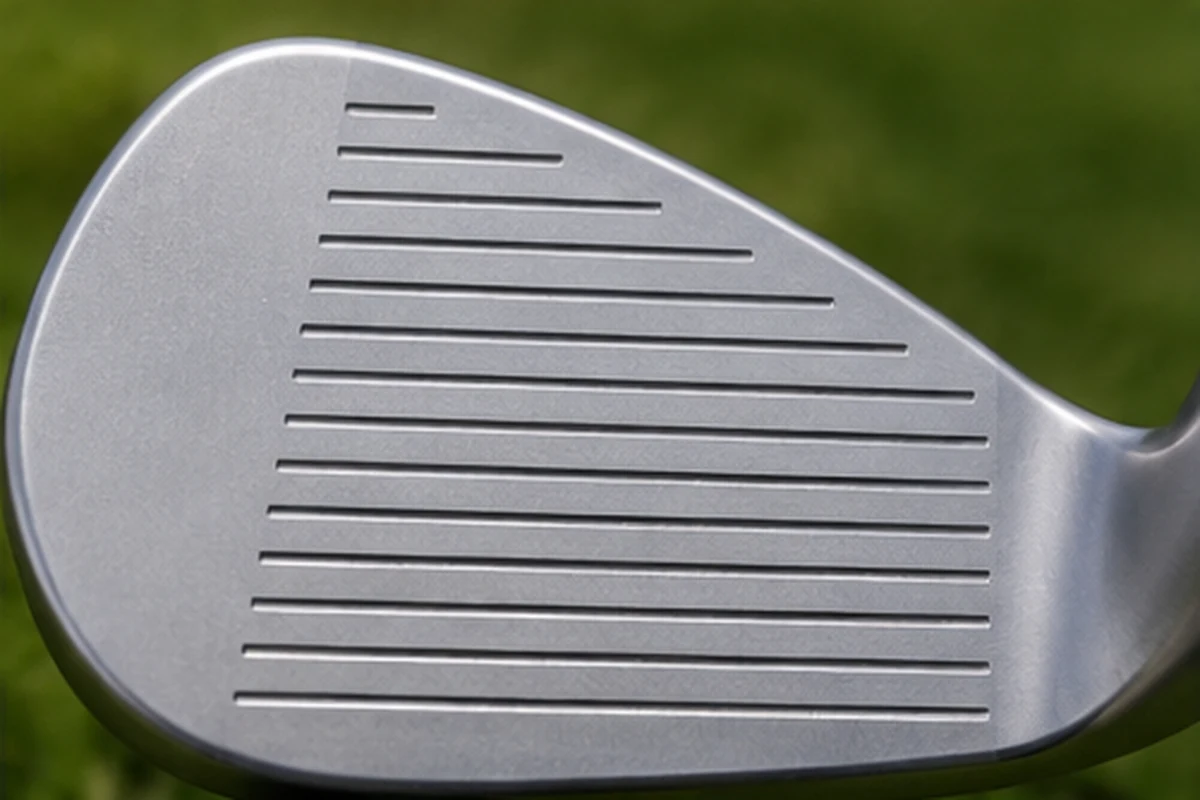
A wedge can be worn out without looking worn out. The chrome might still be present, the shaft straight and the grip in excellent condition. The parallel lines across the clubface may even look sharp enough when you examine them under the kitchen light. Yet the ball that used to stop near its first bounce on the green now lands a little farther forward and keeps moving.
Before you blame the club, however, consider what else has changed. Is the green harder than it was last spring? Did you switch golf balls? Was the shot played from grass that was wet after an early morning watering? A wedge is only one participant in the collision with the ball, and there are plenty of ways to lose spin without wearing out a single groove.
So when does an older wedge actually deserve replacing? There is some useful experimental evidence for that question, alongside a few practical checks you can make with your own equipment.
The numbers are more interesting than the appearance
Titleist's Vokey research team published a robot test comparing three conditions of wedge wear. The results were as follows:
| Wear condition | Launch | Backspin | Roll after landing |
|---|---|---|---|
| New grooves | 33° | 8,500 rpm | 10 ft |
| Equivalent of 75 rounds | 34° | 7,400 rpm | 18 ft |
| Equivalent of 125 rounds | 35° | 6,500 rpm | 24 ft |
The older wedge in that experiment produced 2,000 fewer revolutions per minute of spin than the new one. That's roughly a 24 percent reduction. More striking from a scoring standpoint, the ball ran fourteen feet farther after it landed. On a short approach to a front pin, fourteen feet is an appreciable difference.
These are the manufacturer's figures, not a guarantee of identical performance from your own clubs. The test used a controlled wear process and a robot, rather than waiting for hundreds of individual golfers to complete the same number of rounds. Your local conditions, wedge construction and the way you practice can yield quite different rates of degradation. The results are nevertheless a useful demonstration that groove wear can change flight and stopping behavior even when the difference in launch angle sounds small.
Titleist advises inspecting wedges at around 75 rounds. Inspecting is the important word. It doesn't mean every golfer needs to place an order as soon as round number 75 appears in the score-tracking app.
Look at the part of the wedge you actually use
Wash the clubface and dry it. Under a strong light, examine the central and lower portions of the hitting area, then compare them with the grooves near the toe, where fewer balls are likely to have struck. A polished patch or a visible difference in the condition of the groove edges is worth investigating. Look for burrs, dents or damage from striking a stone. A magnifying glass can help you see differences that are difficult to distinguish with the naked eye.
Don't drag a blade or a sharp tool along the grooves to discover how much metal you can remove. You are inspecting an existing club, not remachining it. Groove geometry is regulated in golf equipment rules, and amateur attempts to sharpen them can alter the face in unpredictable ways or make the club unsuitable for play under those rules.
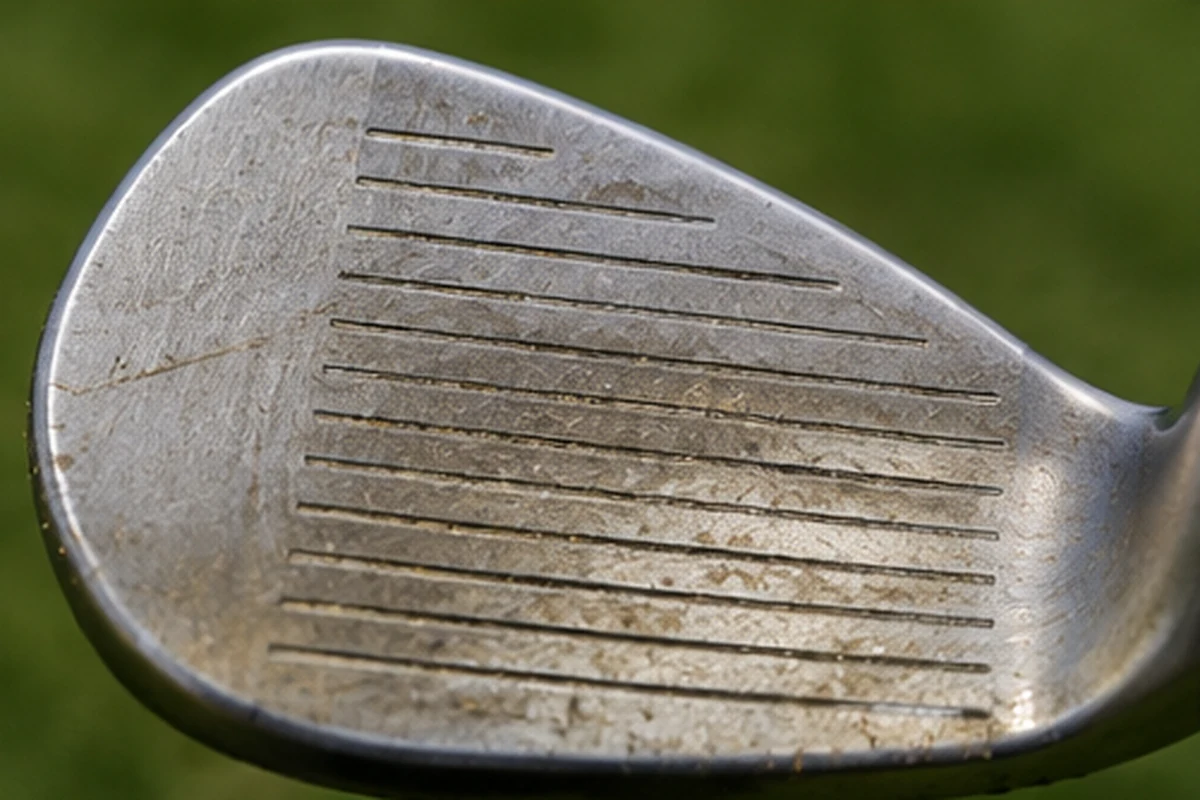
Surface discoloration is another misleading signal. Some wedges are intentionally sold with unfinished areas that can develop rust. The presence of rust alone doesn't establish the remaining spin capability. Nor does a cosmetically beautiful face establish that its central groove edges are in their original condition. Worn plating, bag chatter on the back and a scratched sole are clues about the life the club has led, rather than conclusive measures of its performance.
The practice bunker is particularly hard on a wedge
A golfer who plays once a week and uses the sand wedge twice per round might accumulate fewer damaging sand strikes than another golfer who plays twice a month but spends an hour practicing bunker shots every weekend. Counting rounds fails to capture that difference.
Sand contains abrasive particles. During a bunker shot those particles are pushed across the sole and face under considerable force. Practice from sandy soil, along with dirt trapped between the ball and the club, increases exposure to abrasion. If you live somewhere with sandy fairways, consider that when comparing the age of your clubs with published replacement recommendations.
It also explains why a pitching wedge and a sand wedge purchased on the same afternoon needn't be replaced together. The pitching wedge may have hit primarily clean balls from fairway grass. The sand wedge might have played hundreds of bunker shots and carried most of the practice load around the green. The latter deserves more scrutiny, irrespective of which club looks nicer from the back.
A controlled comparison you can arrange at the range
If a club begins to behave differently, book time with a fitter or a practice facility that can reliably report wedge spin. Ideally find a new or relatively unused example with the same loft, shaft, head design and sole configuration as your existing wedge. Comparing your old 56-degree sand wedge with a completely different 58-degree club creates several variables that prevent you from isolating wear.
Bring several of the same kind of golf ball you normally play. Start at a comfortable partial-shot distance, perhaps 50 yards. Dry the clubface and use a consistent lie for the initial shots. Alternate between the two clubs rather than hitting twenty with one before picking up the other. That helps reduce the effect of warming up or becoming tired during the test.
Record ball speed, launch angle, carry and spin for a group of reasonably comparable strikes. If you can measure impact location, do so. A higher or lower strike on the face can change spin even with the same wedge. Look for a persistent difference rather than the highest figure from either club. An extra 2,000 rpm on one wonderfully struck pitch is not particularly convincing if the remaining shots are all over the place.
If it is safe and the facility allows it, repeat the comparison with slightly damp grass or a light covering of grass between the club and ball. The ability to manage moisture and material at the face is an important function of groove design. Clean, dry strikes alone might not reveal the full difference between the clubs.
Stop cleaning your wedge only when it goes back in the bag
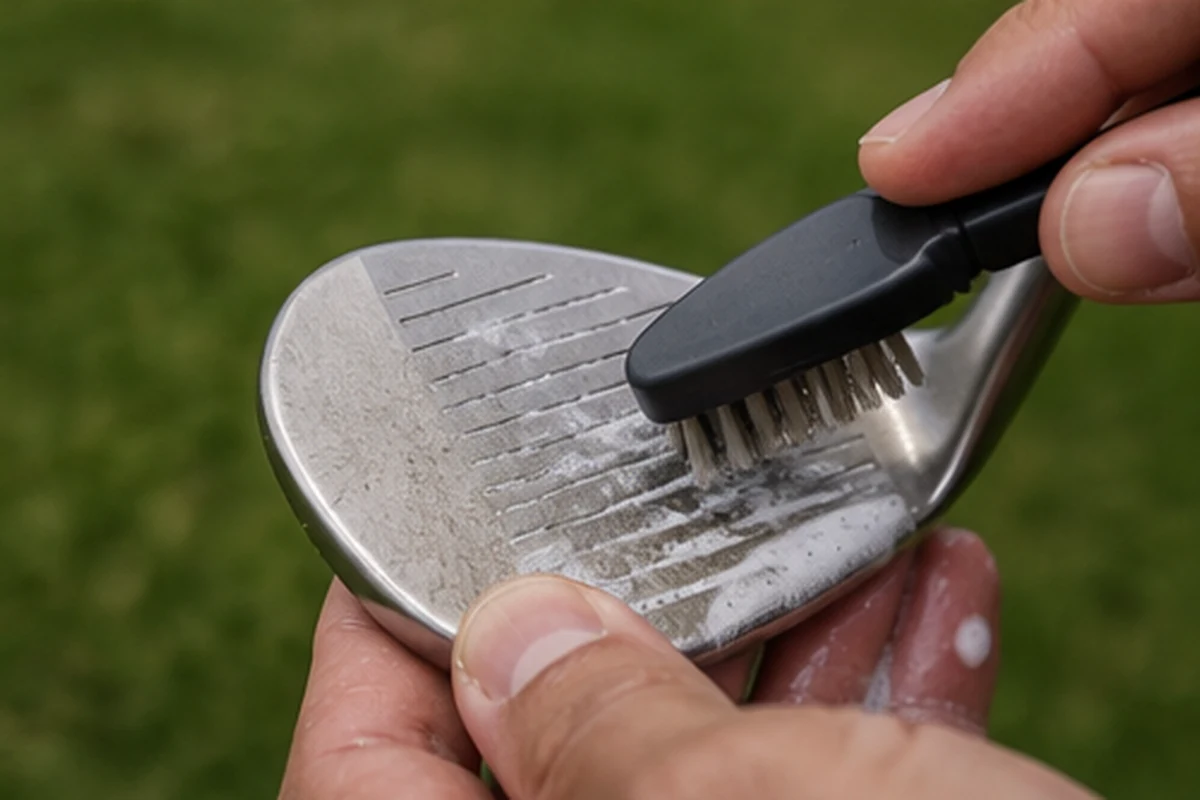
After a pitch from damp rough, examine the face. The grooves often contain compressed grass or mud. Hitting another pitch with that material still present is a rather good way to find out why players carry towels. Clear the face with a damp cloth and a suitable soft-bristled brush, then dry it before playing the next shot. Follow the manufacturer's instructions for the specific finish.
This is ordinary maintenance, not a method of renewing worn grooves. Once material has been abraded away from an edge it cannot be restored with soap and water. Cleaning is valuable because it removes an avoidable source of inconsistent performance; it also makes it easier to recognize physical wear when you inspect the club later.
Keep particularly battered range balls and unnecessary sand off the face when practicing elsewhere, and don't use an abrasive household cleaner to polish away every cosmetic mark. A clubface is a functional surface. It needn't look like the day it left the factory to remain useful.
Make the replacement earn its place
If your current wedge is several years old but still produces predictable distances and stopping behavior on the shots you actually play, there is little reason to replace it solely on account of its birthday. If a comparison shows that a fresh version offers materially better spin consistency and control, the decision is easier.
Consider transferring a worn club to a dedicated practice role after buying its replacement. This makes particular sense for repeated bunker drills, which expose the head to abrasive sand. Practice with the new club enough to learn its actual flight and rollout; do not assume shots will behave exactly as they did with the old wedge. The difference that justified the purchase is the very difference that needs to become familiar.
For anyone working with a limited equipment budget, start by checking the club that sees the most short-game action. Replacing one unreliable scoring wedge is often a more targeted use of money than buying a matching trio. You might discover that the old pitching wedge is perfectly serviceable and the sand wedge is the only club that needs attention.
Source: Titleist Vokey groove-wear robot testing and inspection guidance.