

How Iron Lie Angle Affects Your Shots
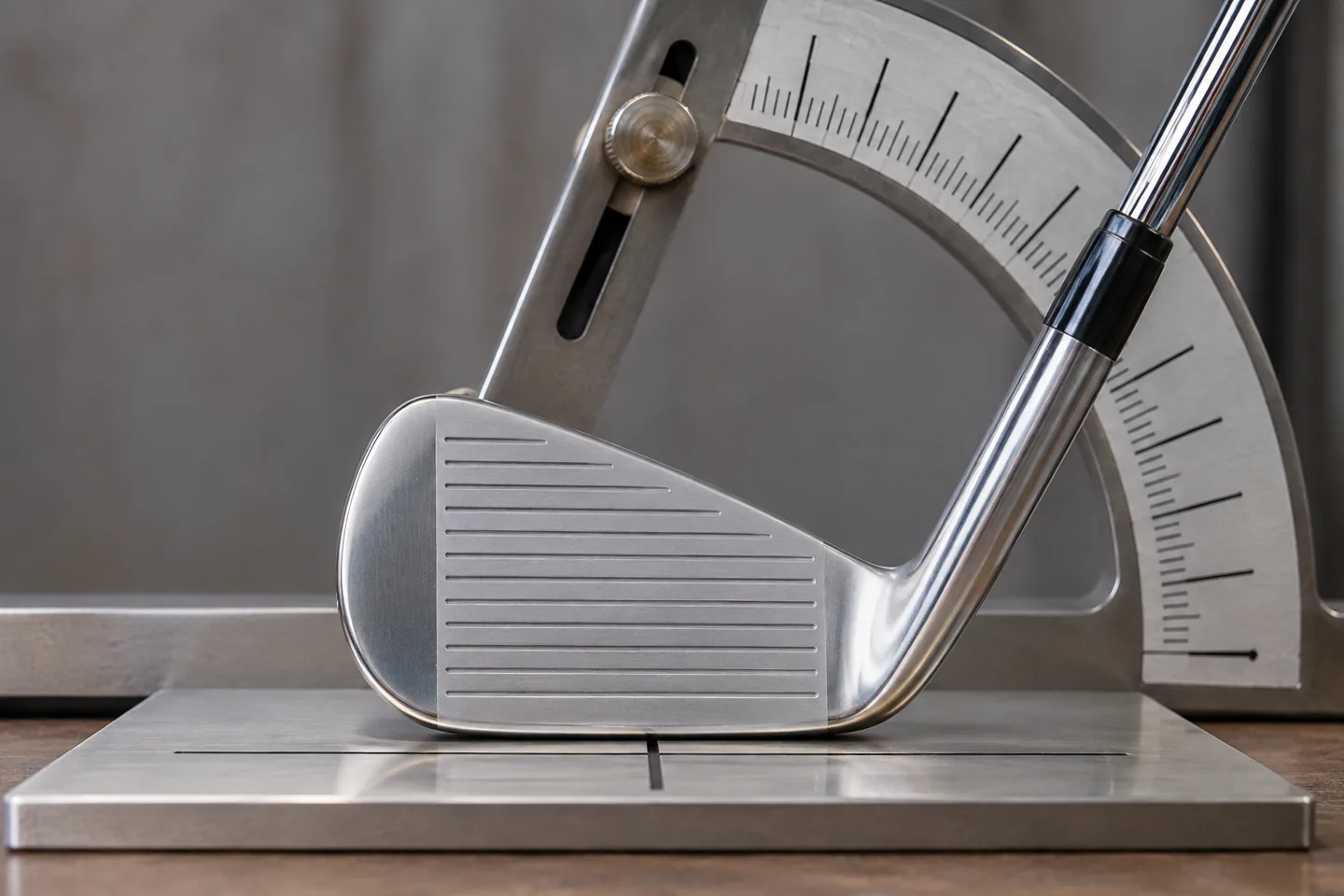
An iron can sit beautifully on the floor of a golf shop and still arrive at the ball with the toe raised. The difference between those two positions is why a static fitting measurement is only the beginning.
Lie angle becomes particularly relevant when a golfer consistently sends otherwise solid iron shots to one side of the target.
Understanding the measurement
Lie angle describes the angle between the shaft and the ground reference when the head is positioned according to the manufacturer's measurement method.
An upright iron has a larger lie angle. A flatter iron has a smaller one. Two irons with different lofts and playing lengths will ordinarily have different standard lie angles within the same set.
A fitter might describe an adjustment as two degrees upright from standard. That statement is relative to the specific model's standard specification. It doesn't establish an absolute measurement across manufacturers.
Why the ball starts sideways
With a lofted clubface, tilting the toe upward changes the direction in which the face points. For a right-handed golfer, a toe-up orientation shifts the effective face direction left. A toe-down orientation shifts it right. Reverse those directions for a left-handed golfer.
The effect increases with loft for a given tilt. That's one reason a seemingly small lie-angle error deserves attention in short irons and wedges.
The divot itself isn't the primary explanation. The geometry of the face at impact affects the initial direction of the ball, even before the sole interacts significantly with the ground.
Check the delivery you actually produce
At address, your hands and shaft occupy one position. During the downswing, shaft deflection and the way you deliver the club change that relationship.
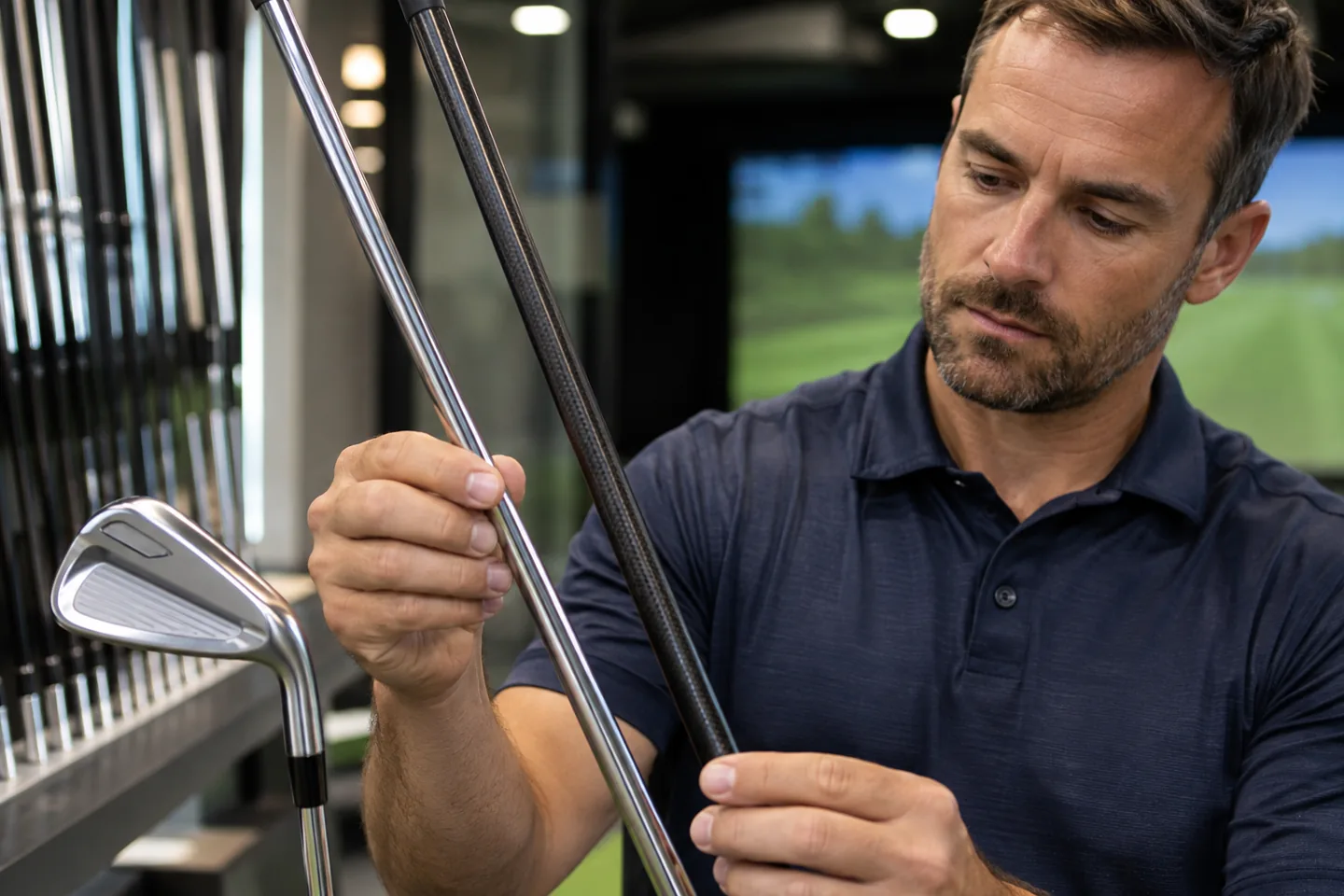
A wrist-to-floor measurement helps establish a starting point for length and lie. Dynamic testing then shows how the club behaves during a swing.
One useful fitting technique involves drawing a vertical line on a golf ball with a suitable marker. Set the ball down with the marked line vertical and facing the clubface. When the golfer strikes it, the transferred mark provides a reference for evaluating the orientation of the face at impact.
A technician should interpret several representative strikes, taking into account face orientation and measurement setup. A single poor strike isn't sufficient evidence to bend an iron.
Traditional lie boards and sole tape can offer information about contact with the board. They have limitations, particularly when the board changes the player's delivery or the mark reflects contact after the ball has left the face.
When a left miss isn't a lie-angle problem
A golfer who pulls every short iron might reasonably suspect an upright lie. But a closed face or a swing path aimed left could produce a similar pattern.
Look first at the starting line and curvature. For example, a shot starting left and curving farther left suggests a different delivery problem from a shot starting left and gently fading.
A launch monitor with club data helps a fitter separate face angle, club path and impact orientation. Face spray helps identify strike location. Together, these observations provide much stronger evidence than where the ball happens to finish.
Try a demonstration club with a different lie while keeping the head model, length and shaft as closely matched as possible. If the starting direction improves without an undesirable change in the golfer's delivery, the adjustment has a practical basis.
How far can a degree matter?
For an idealized illustration, imagine a clubface with 40 degrees of loft and a two-degree toe-up roll about the target axis. The induced horizontal face-direction change is approximately 1.7 degrees. At 130 yards, a straight line at that angle would be nearly four yards left of the original target line for a right-handed golfer.
Real shot results are more complicated. Delivered loft, face and path, speed, impact location and ball curvature influence the final position. This geometry explains why lie angle is worth measuring; it isn't a promise of a particular yardage correction.
Adjustments belong on a proper bending machine
A club technician measures loft and lie before making an adjustment, then measures them again afterward. An experienced technician also checks the manufacturer's guidance about the head's material and construction.
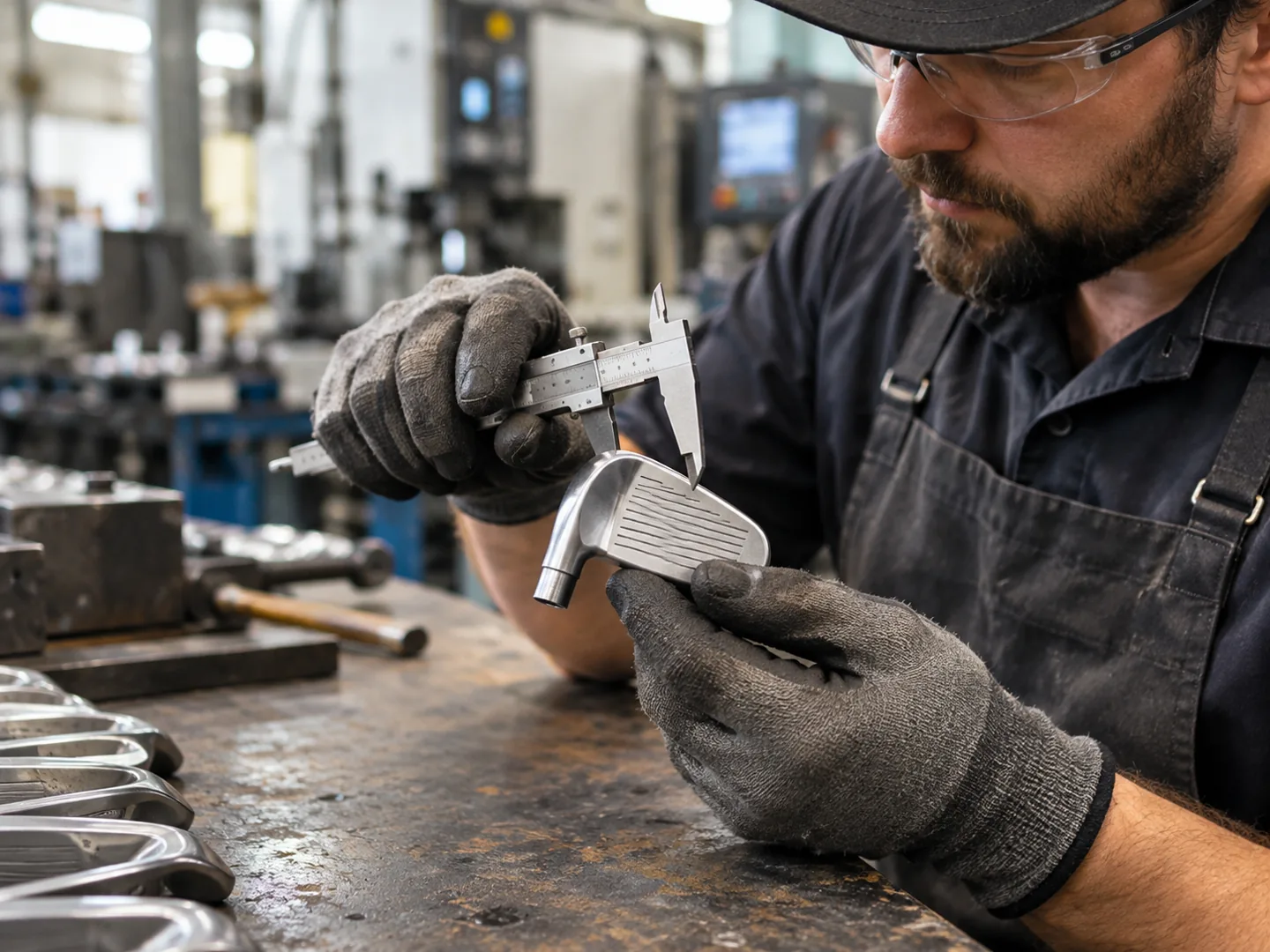
Some forged heads are relatively easy to adjust. Certain cast heads, hollow designs and specialty constructions have tighter bending limits. Age, prior modifications and damage also matter.
Don't attempt to bend an iron in a household vise. Apart from risking the finish and the hosel, it's difficult to measure the result accurately.
If you're shopping for new equipment, review the differences between forged and cast irons, then ask the manufacturer or fitter what adjustments are approved for the precise model.
Check more than the seven-iron
The way a golfer delivers a pitching wedge may differ from the way that same golfer delivers a five-iron. A carefully fitted seven-iron doesn't guarantee every club in the set is correct.
Test representative long, middle and short irons. If one particular club repeatedly sends solid shots in the wrong direction, have its actual lie and loft checked against the set specifications. Previous repairs and years of use can leave individual clubs different from their original measurements.
After adjustment, return to the range with the same target and ball. Evaluate the starting line before judging the final result. If possible, compare the measurements that led to the change with the measurements afterward.
An iron fitting is successful when it removes an equipment-related source of inconsistency without asking you to compensate for it during every swing.