

Forged vs. Cast Irons: What Actually Matters
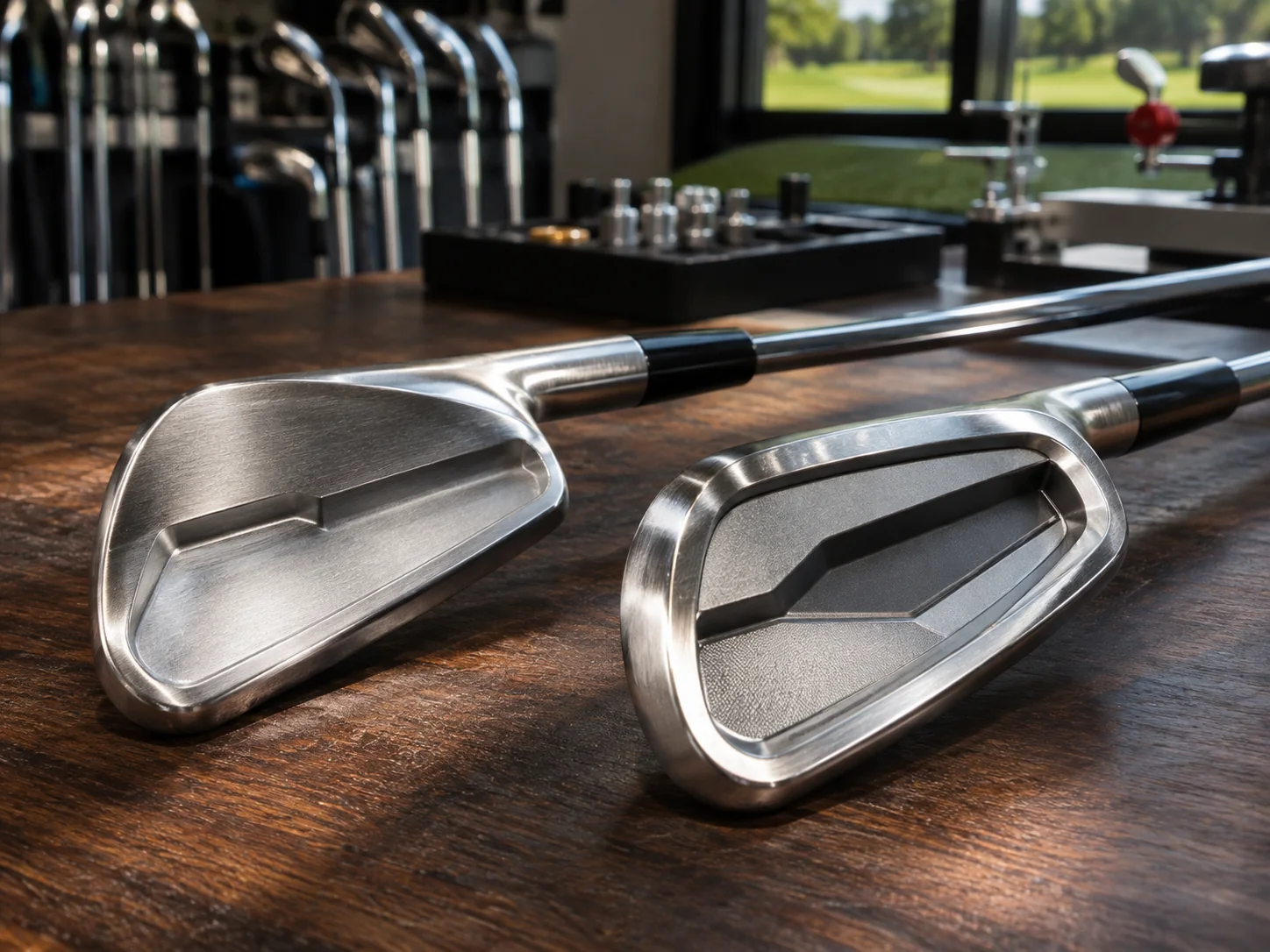
A golfer can love the look of a forged iron before ever hitting it. The head catches the light, the finish looks beautifully simple, and the word forged carries a reputation for craftsmanship. Then another golfer picks up a cast iron, hits five excellent approach shots in a row, and has no reason to wish for anything else.
Both golfers can be right about what they enjoy. The mistake is treating the manufacturing method as a shortcut for predicting how an iron will perform.
Forged and cast describe how a clubhead is made. Blade and cavity back describe aspects of its design. Those are different questions. Understanding that distinction can save you from paying for a label when you should be comparing the actual shots you hit.
What forging actually means
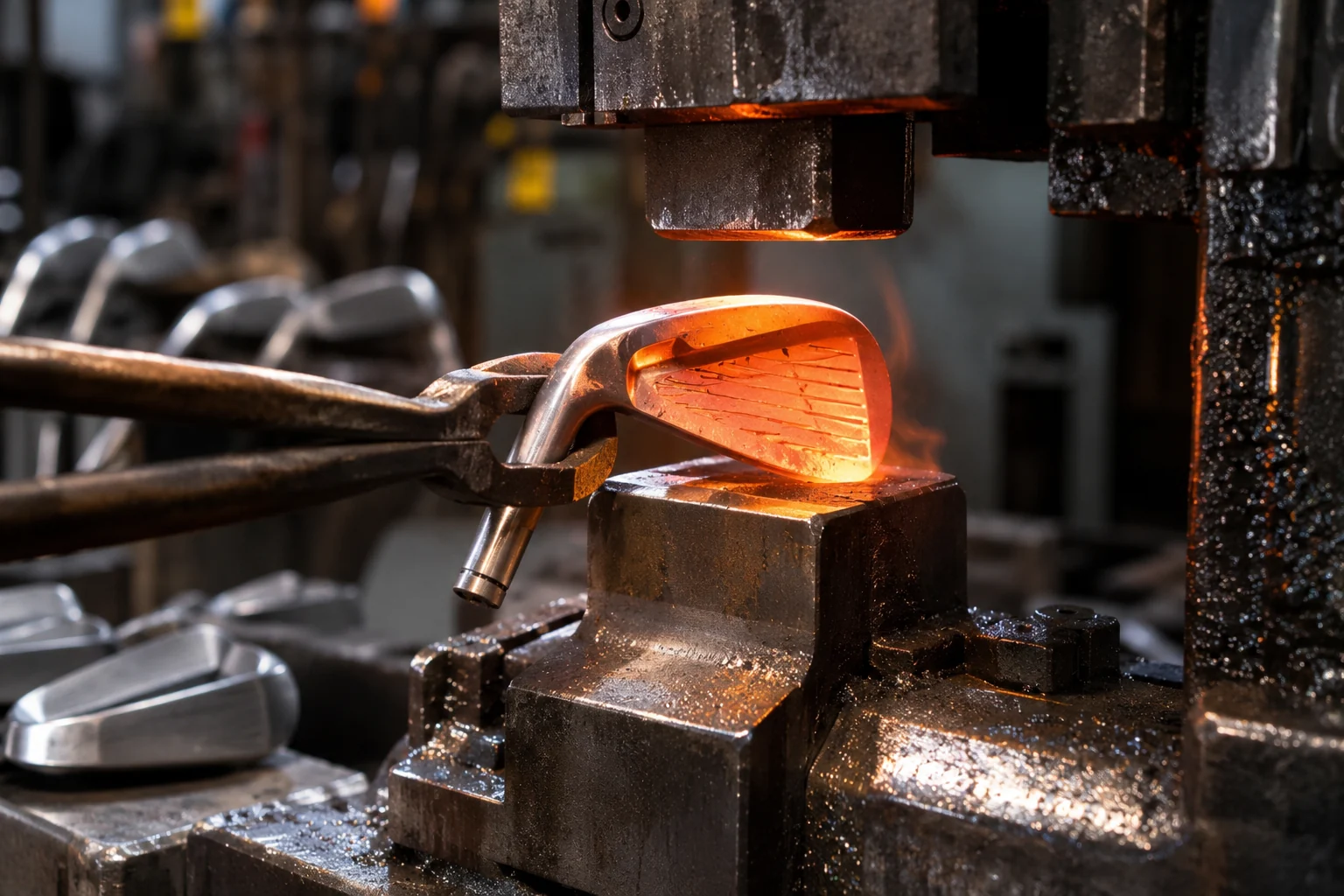
In a traditional forging process, a piece of metal is heated and shaped under considerable pressure, often through multiple stages, before machining and finishing produce the final head. The process can give the designer control over shaping, tolerances, and the chosen material. Many compact muscle-back and player's irons use forged construction.
But a forged iron need not be a tiny blade. Manufacturers also make forged cavity-back heads and irons incorporating several materials. And a club described as having a forged face may not have a completely forged body.
If the word forged appears in a product description, find out which part is forged. The whole head, the face, or selected components? These are different constructions.
How investment casting differs
In investment casting, a mold is made to form the desired clubhead shape. Molten metal is poured into the mold and allowed to solidify. The head is then finished and checked against the intended specifications.
Casting gives designers considerable freedom to build complex shapes, cavities, and mass distributions. It has long been used to make high-performing irons, including clubs preferred by accomplished golfers.
A cast head is not automatically cheap, crude, or inaccurate. Like forged heads, its quality depends on design, material selection, manufacturing consistency, and finishing. The best comparison is between actual models, not an imagined contest between all forged clubs and all cast clubs.
A comparison worth remembering
| Question | Forged head | Cast head |
|---|---|---|
| Basic method | Metal is shaped under pressure | Molten metal solidifies in a mold |
| Can it be a cavity back? | Yes | Yes |
| Can it be forgiving? | Yes, depending on design | Yes, depending on design |
| Is it automatically softer at impact? | No | No |
| Is the material always the same? | No | No |
| Does the manufacturing label predict distance? | No | No |
| Should it determine your purchase alone? | No | No |
Manufacturing affects the range of designs and materials available. It does not erase the importance of the finished clubhead's geometry, loft, center of gravity, face behavior, and shaft.
Why feel is so difficult to compare fairly
A golfer who strikes a forged iron beautifully may describe a soft, dense sensation at impact. That experience is real, but it does not prove the forging process alone created it.
The sound an iron makes, the material used, how the face and body are constructed, the shaft, the golf ball, and the exact strike location all influence what reaches your hands and ears. Some modern cast or multi-material irons are engineered specifically to control sound and vibration.
Try a blind comparison if you have access to a fitting bay. Ask a fitter to help you compare similarly shaped irons using the same ball, with shafts and lofts as close as possible. Hit enough shots to include your ordinary misses. You may still prefer one model's feel, but the exercise can reveal whether you are responding to the actual strike or to the appearance and story of the club.
A useful rule is to prioritize feel that supports repeatable contact over feel that only impresses you on the best swing.
Forgiveness comes from design, not the forging label
One of the most common misconceptions is that forged automatically means difficult and cast automatically means forgiving. Historically, many forged sets were compact muscle backs and many cast sets were cavity backs. That association stuck even as manufacturing evolved.
On a strike toward the toe or heel, the clubhead can twist and the ball can lose speed. Mass distribution and moment of inertia help determine how much of that penalty the design can manage. A perimeter-weighted forged cavity back may protect the golfer's off-center contact better than a small cast muscle-back head.
If you want to understand that difference in detail, see our blade versus cavity-back iron comparison. It is the better place to begin when the problem you are trying to solve is inconsistent contact.
This is also why players with low handicaps are not required to buy forged blades. Strong players can benefit from forgiving designs. And a golfer who enjoys traditional heads can still choose them without claiming that they are universally superior.
Will forged irons fly farther?
There is no inherent distance advantage that follows from the word forged. A particular forged iron may travel farther than a particular cast iron because its loft, face construction, shaft, length, or impact conditions differ. The reverse can be true too.
Imagine testing two seven-irons. One carries 165 yards and the other 157. Before deciding that manufacturing caused the difference, check the lofts. If one head has several degrees less loft, you may be comparing different flight windows disguised by the same club number.
Carry distance matters, but so do launch, spin, peak height, landing angle, and dispersion. An approach shot that travels a few yards farther but lands too flat to stop on the green may be less useful.
Use the full club-selection guide when you want to evaluate the entire set rather than isolate one manufacturing feature.
What about consistency between irons in a set?
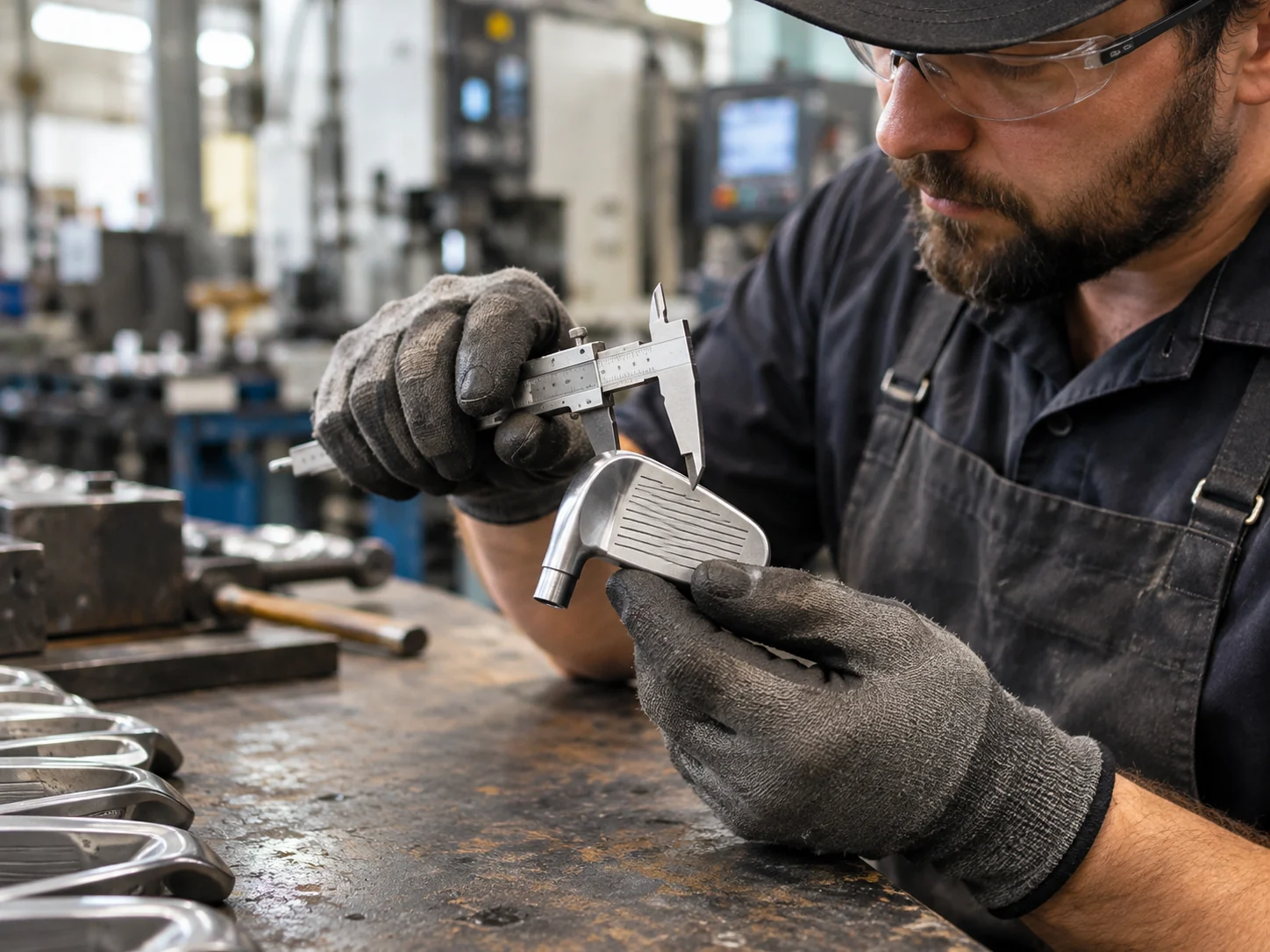
Manufacturing tolerances and quality control matter. The loft, lie, head weight, and other specifications should match the intended progression throughout a set. However, it is not safe to assume that one construction method guarantees perfect consistency or that the other cannot produce it.
If you are buying used irons or adjusting a set, a competent club technician can measure the actual loft and lie specifications. That may reveal a more important performance issue than whether the head began life as a forging or a casting.
Consider a golfer whose eight-iron and nine-iron carry nearly the same distance. A wrong loft gap, inconsistent strike, or another fitting issue deserves investigation before replacing the set for a different manufacturing method.
Are forged irons more durable?
Durability depends heavily on the specific material, surface treatment, usage, and care. Some softer forged heads can show bag chatter and cosmetic marks more readily than certain harder cast heads. But a scratch is not the same as a structural failure, and not every forged head uses the same metal or finish.
Inspect used irons for damage that affects play, especially cracks, loose heads, bent shafts, severe face wear, and poorly performed alterations. Ordinary marks on the back of a head may be mostly cosmetic.
Groove condition and face wear can matter particularly for golfers who play frequently in sand or abrasive conditions. Do not confuse attractive finishes with guaranteed durability.
Loft and lie adjustments deserve care
Many golfers have heard that forged irons are easier to bend for loft and lie adjustments. Some traditional forged carbon-steel heads are indeed more readily adjustable than certain cast stainless-steel designs. But the exact alloy and manufacturer limits determine what is safe.
Some cast heads can be adjusted. Some forged or multi-piece heads have strict limitations. Trying to bend a head without knowing the manufacturer's guidance risks permanent damage.
If an iron launches consistently in the wrong direction or has awkward distance gaps, ask a qualified club technician to measure the specifications and check the adjustment limits. Do not attempt the change yourself with improvised tools.

The real reason to compare forged and cast irons on grass
In a golf store, it is easy to judge clubs by their best impact on an indoor mat. On the course, you also hit from tight lies, soft fairways, and uneven ground.
The sole, leading edge, bounce, and head shape affect how the club interacts with turf. These characteristics are not determined by the word forged. A golfer with a steep delivery may respond differently to a sole than a golfer who sweeps the ball.
When you can, take the finalists onto a grass range. Observe whether contact feels predictable and whether the sole moves cleanly through your usual turf conditions. A beautiful iron that digs excessively in your swing may not be the right choice.
How to run a useful fitting comparison
A fair test is more revealing than a long argument about materials. Use this process:
- Bring your current seven-iron. Establish a baseline before trying anything new.
- Compare lofts. A stronger-lofted club must not win only because its number matches the other club.
- Keep shaft changes controlled. If possible, use similar lengths, weights, and flex profiles. Our shaft material guide explains why this matters.
- Alternate clubs. Hit several balls with each, then return to the first rather than letting one benefit from a better late-session rhythm.
- Keep ordinary mishits. A single perfect strike is not a representative result.
- Review the whole shot pattern. Carry, front-to-back spread, left-to-right dispersion, and stopping conditions are more valuable than the longest shot.
- Notice confidence at address. Appearance can influence how comfortably you aim and swing.
- Ask what the price difference buys you. A measurable or strongly preferred benefit may be worth paying for. A label alone is not.
If one club produces more dependable approaches and suits your budget, that is a reason to favor it regardless of manufacturing method.
Who should consider forged irons?
A golfer who likes the shaping, sound, and feedback of a particular forged iron can have an excellent reason to buy it. If the head provides the trajectory, distance pattern, and appearance you prefer, the manufacturing details may help explain its design.
But do not assume that you must reach a particular handicap before trying one. Modern forged constructions include forgiving models. Judge the specific head, not a reputation attached to the category.
Who should consider cast irons?
Anyone whose preferred model happens to be cast. That includes beginners, improving golfers, and skilled ball strikers. Casting offers flexibility in head design, and there are many excellent cast irons with dependable distance control, pleasing feel, and useful forgiveness.
If a cast iron outperforms an expensive forged option in your hands, you have already found the answer to the buying question.
Questions golfers often ask
Are forged irons only for low-handicap golfers?
No. There are forged cavity backs and other constructions that can work for a wide range of abilities. Head design and fit matter more than handicap labels.
Do forged irons automatically have better feedback?
Not automatically. Some golfers prefer the feedback of traditional forged heads, but sound, vibration, materials, shaft, ball, and strike quality all influence the sensation.
Are cast irons always more forgiving?
No. Forgiveness is a design characteristic. Perimeter weighting, mass distribution, and face construction are more informative than the manufacturing label.
Are forged clubs worth paying more for?
Only when the specific model provides something you value, such as better performance, a preferred feel or look, or features you cannot obtain as effectively elsewhere. The price is not a performance guarantee.
Can a forged iron be adjusted for loft and lie?
Some can, but adjustment limits vary with material and construction. Ask the manufacturer or a qualified club technician before bending any head.
A better way to make the decision
Buy irons for the golf you play, not for the manufacturing story told on the shelf. Test them with your usual ball and normal swing. Look beyond the pure strikes. Compare what happens when contact moves toward the toe, when you face a longer carry, and when the turf is less forgiving.
The right irons are the ones that give you confidence about your next approach. If those irons are forged, enjoy them. If they are cast, you are not missing a secret advantage simply because the heads were made differently.