

How to Choose the Right Golf Clubs for Your Game
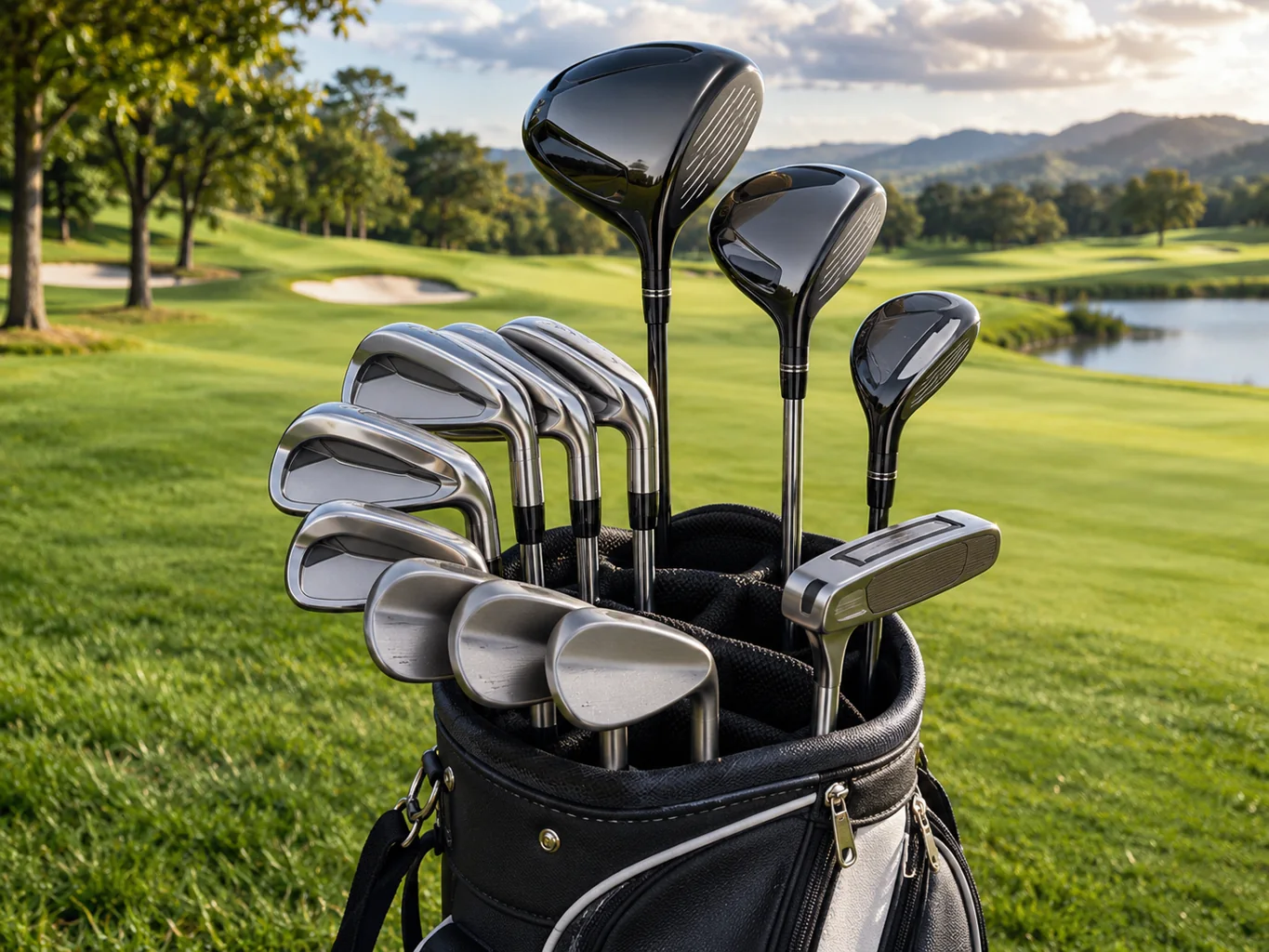
Golf shops are full of equipment designed to solve problems. Drivers promise more speed, irons promise higher launch, shafts offer different weights and flexes, and wedges come in enough loft and sole combinations to make a simple purchase surprisingly complicated.
But before you replace a club, you should know what you want the replacement to do. Otherwise, you can spend a lot of money buying a different version of the same problem.
A useful golf bag is not necessarily the newest or most expensive one. It gives you reliable options at the distances and situations you actually face.
Start with the shots that cost you strokes
Think back over your last few rounds. Which clubs did you reach for with confidence? Which ones did you avoid? Did you repeatedly hit one club short of a hazard? Did a particular iron fly too low to hold a green? Were you caught between wedge distances?
Write down specific problems rather than saying you need better clubs.
For example, if you hit a seven-iron well but dread a four-iron from the fairway, a hybrid or higher-lofted wood may do more for you than replacing the entire iron set.
If you are new to golf, the beginner club buying guide explains how to begin with a simpler set and add clubs as your needs become clearer.
Know what every club is there to do
You may carry up to fourteen clubs under the Rules of Golf, but you do not have to carry fourteen. A sensible bag covers usable distance ranges and different shot demands without needless overlap.
Driver: playable distance from the tee
The driver is made for long tee shots, but the longest drive is not always the best one.
Imagine one driver that occasionally flies 260 yards but produces a costly right miss. Another carries a little less but leaves you with clear approach shots much more often. The better driver depends on the whole pattern, not one spectacular swing.
During a fitting, compare contact location, ball speed, launch, spin, and directional dispersion. Loft can help a golfer produce useful launch conditions, but more or less loft is not automatically better. The right head and shaft combination depends on how you deliver it.
Fairway woods: long shots from more than one lie
A three-wood can be an excellent tee option, but hitting a low-lofted wood from the grass is challenging for some players. A five-wood or seven-wood may be easier to launch and may produce a better carry into a distant green.
A golfer who uses a three-wood only from the tee has a different requirement from someone who regularly tries to reach par fives in two. Make that distinction before shopping.
Hybrids: alternatives to hard-to-hit long irons
A hybrid often gives golfers a more playable flight than a traditional long iron. Its head construction and center of gravity can help some players launch the ball.
However, hybrids are not guaranteed cures for long-iron problems. Test the particular models against the actual club you want to replace. Check whether the hybrid creates a genuinely new carry distance and whether its typical miss is manageable.
Irons: predictable distances into greens
Your iron set should help you carry the ball useful distances with enough height and control for your course. Some players favor compact heads; others need stability on off-center strikes.
For a detailed discussion of head construction, read blade versus cavity-back irons.
Be especially careful with the distance claims attached to modern irons. A manufacturer's seven-iron can have a different loft from another manufacturer's seven-iron. Longer does not automatically mean better if the new shot arrives too flat or creates poor distance gaps.
Wedges: scoring distances and ground interaction
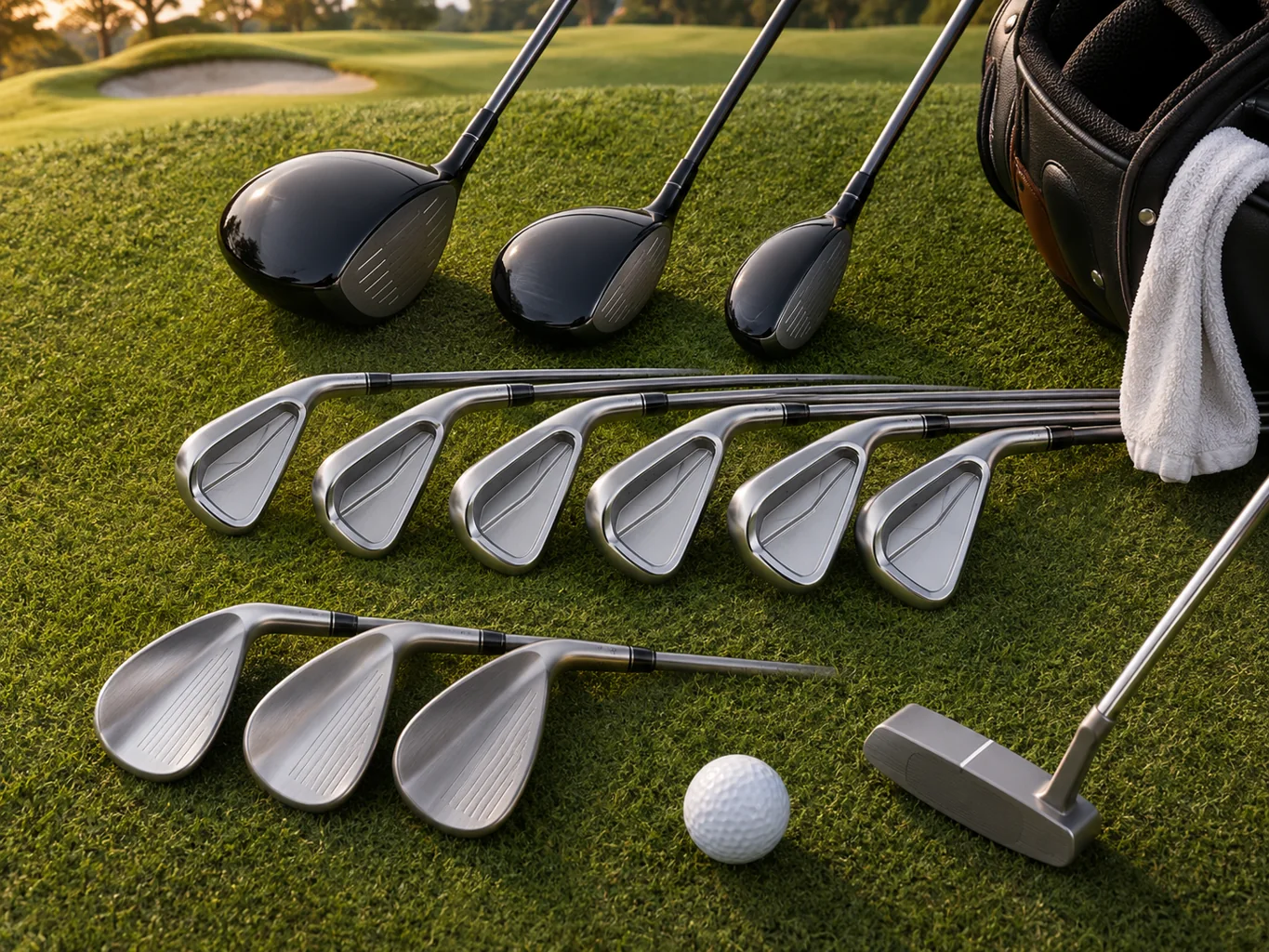
Start with the loft and carry distance of your pitching wedge. From there, build sensible gaps toward your sand and higher-lofted wedges. A pitching wedge and gap wedge that travel almost twenty yards apart may leave an awkward scoring distance.
Wedge bounce and sole shape matter too. The best combination depends on turf, sand, swing delivery, and the kind of shots you use most often.
Do not buy four specialty wedges merely to fill the bag. Carry the wedges you understand and practice with.
Putter: starting line and distance control
Choose a putter you can aim comfortably and use to start the ball on your intended line. Test longer putts as well as short ones. Head shape, alignment marks, length, lie, grip, and weighting all influence the fit.
A mallet may provide alignment aids or more resistance to twisting, but it will not automatically suit every stroke. A traditional blade putter can also be a good choice. Test what happens to the ball rather than choosing by appearance alone.
Check your carry distances before replacing clubs
Carry distance is how far the ball travels before it lands. Total distance includes roll afterward. When you must clear a bunker, stream, or front edge, carry is the number you need to know.
A simple gapping session can expose problems that are otherwise easy to miss.
| Club | Example carry distance |
|---|---|
| Five-iron | 165 yards |
| Six-iron | 157 yards |
| Seven-iron | 149 yards |
| Eight-iron | 138 yards |
| Nine-iron | 125 yards |
| Pitching wedge | 108 yards |
| Gap wedge | 87 yards |
These are hypothetical distances, not recommended targets. Notice the 21-yard gap between the pitching wedge and gap wedge. A 98-yard approach now requires an uncomfortable partial shot with one club or an unusually strong shot with another.
The solution may be a different wedge loft, a better partial-swing system, or a combination of the two. The important point is that you identified a specific problem before buying.
At the long end of the bag, a different issue is common. A golfer's five-iron and six-iron may carry almost the same distance because the longer club does not launch efficiently enough. That can make a hybrid or higher-lofted fairway wood worth testing.
Make a realistic distance chart
Warm up before collecting numbers. Hit several normal shots with each club and record their carry when a reliable measurement is available. If possible, record the usual left or right miss too.
Do not build your chart from the longest shot with each club. It should represent the distances you can reasonably expect on the course.
A launch monitor is helpful, but remember that some systems display normalized values rather than precisely what happened to the ball under the day's outdoor conditions. Keep the measurement method consistent.
There is no requirement for exactly ten yards between clubs. The correct spacing depends on speed, loft, trajectory, and how you use each club.
Shaft flex is not a badge of skill
Regular, stiff, and extra-stiff labels sound straightforward, but the industry does not use one universal standard. Two shafts with the same printed flex may feel and perform differently.
Swing speed can help narrow the options. So can the way you transition from backswing to downswing and how the club loads and releases. A flex chart is a starting estimate, not a fitting result.
Instead, compare contact, carry, launch, direction, and comfort. Our regular versus stiff shaft guide explains why the printed label alone is unreliable.
Weight can matter as much as flex
Some golfers struggle with a shaft that is simply too heavy to swing comfortably throughout a round. Others become less consistent with a shaft that feels excessively light. Try different weights before concluding that stiffness is the problem.
Steel and graphite are material families with many different weight and bending options. Neither guarantees accuracy. The steel versus graphite comparison covers the tradeoffs.
Check length, lie angle, and grip fit
These specifications rarely lead advertisements, yet they can make a club difficult or comfortable to play.
Length: Height is one starting measurement, but arm length, posture, and delivery matter. A club that is too long may make center contact difficult. A club that is too short can encourage an uncomfortable setup.
Lie angle: This describes how the shaft and head meet. A poorly matched dynamic lie can influence starting direction, especially with more-lofted irons. Static measurements help, but actual ball flight and impact should guide the decision.
Grip: A good grip lets you hold the club securely without excess tension. Diameter, firmness, and texture should suit your hands and preferences. Do not expect a different grip size by itself to fix an open face or faulty swing path.
When is a professional fitting worth it?
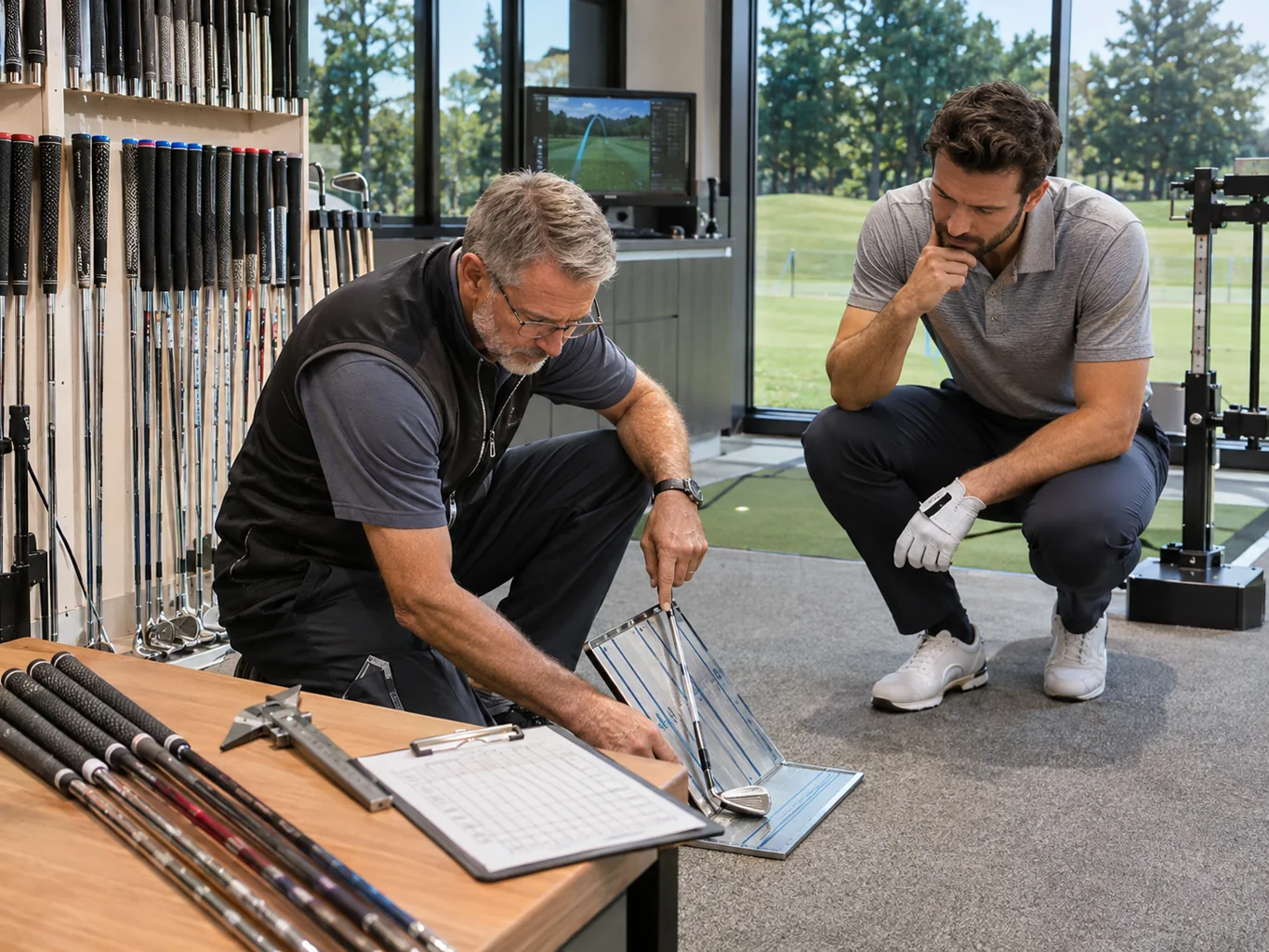
A useful fitting begins with questions. What is your common miss? Which clubs do you trust? Do you struggle with launch, distance control, or contact? What are you hoping the new clubs will change?
The fitter should then establish a baseline using your current clubs. Otherwise, there is no sound comparison for a new one.
Look at more than the headline yardage:
- Center-face contact and strike pattern
- Typical carry distance and variation
- Directional dispersion
- Launch and spin
- Height and landing characteristics
- Comfort over several normal swings
You do not need a perfect swing to benefit from fitting. A competent fitter works with recreational golfers too.
However, if you barely make consistent contact, lessons may provide more value before an expensive overhaul. The same applies if your main problem is a swing issue rather than equipment fit.
A worthwhile fitting should tell you why one option works better and how much improvement it offers. If the results are inconclusive, you do not have to buy.
Try clubs from real grass when possible
Indoor fitting has real advantages, including controlled measurement and easy comparison. Turf conditions matter too, especially with irons and wedges.
A wider iron sole may interact differently with soft turf than a narrow sole. A wedge grind that feels useful on firm lies may not behave the same way in fluffy sand.
A hitting mat can hide some of that interaction. When practical, test the final candidates outdoors or on grass similar to your regular course.
A practical fourteen-club example
Here is one possible arrangement for a golfer whose carry distances support the choices:
| Club | Main job |
|---|---|
| Driver | Long tee shots |
| Five-wood | Long approaches and alternative tee shots |
| Seven-wood | Higher-launching long shots |
| Four-hybrid | Replace a difficult long iron |
| Five through nine irons | Progressively shorter approach distances |
| Pitching wedge | Full short approaches |
| Gap wedge | The distance below pitching wedge |
| Sand wedge | Bunkers and scoring shots |
| Lob wedge | Specialty short shots |
| Putter | Direction and speed on the green |
That adds up to fourteen clubs. It is not a recommended universal set. Some golfers should carry fewer wedges, a three-wood, an extra hybrid, or fewer clubs overall.
The value of a setup comes from distinct, useful distances and shots. If two clubs have almost identical carry and flight, you may have room for something more useful.
Seven buying mistakes that waste money
- Copying a tour player's bag. Their speed, impact conditions, and priorities may be nothing like yours.
- Choosing the stiffest shaft you can tolerate. Flex is a fit characteristic, not a measure of ability.
- Buying irons because one seven-iron flew farther. Check loft and the pattern of your normal shots.
- Ignoring off-center strikes. Even good players miss the middle, especially late in a round.
- Replacing the whole bag for one weakness. A single properly chosen club may solve the actual gap.
- Buying wedges without checking pitching-wedge loft. Poor spacing can leave common approach distances uncovered.
- Spending the full budget on equipment. Range time, rounds, and useful instruction are part of improving.
New clubs, used clubs, or the ones you already own?
Modern equipment can help, but an older, well-fitted club is not automatically obsolete. If your current equipment is in good condition, covers your distances, and produces useful results, there may be no reason to replace it.
Used clubs can be good value. Check head condition, shafts, grips, previous alterations, and the seller's return policy. A newer model is worth the cost when it solves a problem you can measure or clearly recognize.
Be willing to keep a club if the new contender does not offer a meaningful improvement.
Questions to ask before paying
Should beginners buy fourteen clubs?
No. A smaller set can cover lessons and casual golf while you develop consistent contact and learn what distances you need.
Are expensive clubs always better?
No. Better materials, construction, and fitting options can offer benefits, but only if those benefits fit your swing and play.
How often should clubs be replaced?
There is no required schedule. Good clubs can remain useful for years. Replace them because of damage, poor fit, or demonstrated performance gains, not merely age.
Can I buy clubs online without testing them?
Yes, particularly when replacing a familiar model with known specifications. For an unfamiliar set, testing or fitting reduces uncertainty.
Choose your next club with a plan
Play a few rounds and record what actually costs you strokes. Build a carry-distance chart. Identify the club you avoid, the gap you cannot cover, or the miss that repeatedly creates trouble.
Then test equipment designed to address that problem. Compare it with the club you already own. Keep your real mishits in the evaluation, not only the swings that feel perfect.

The right bag should make decisions easier when you stand in the fairway and need to hit a particular shot. It does not need to impress anyone else. It needs to work for your golf.