

The Complete Golf Club Buying Guide for Beginners
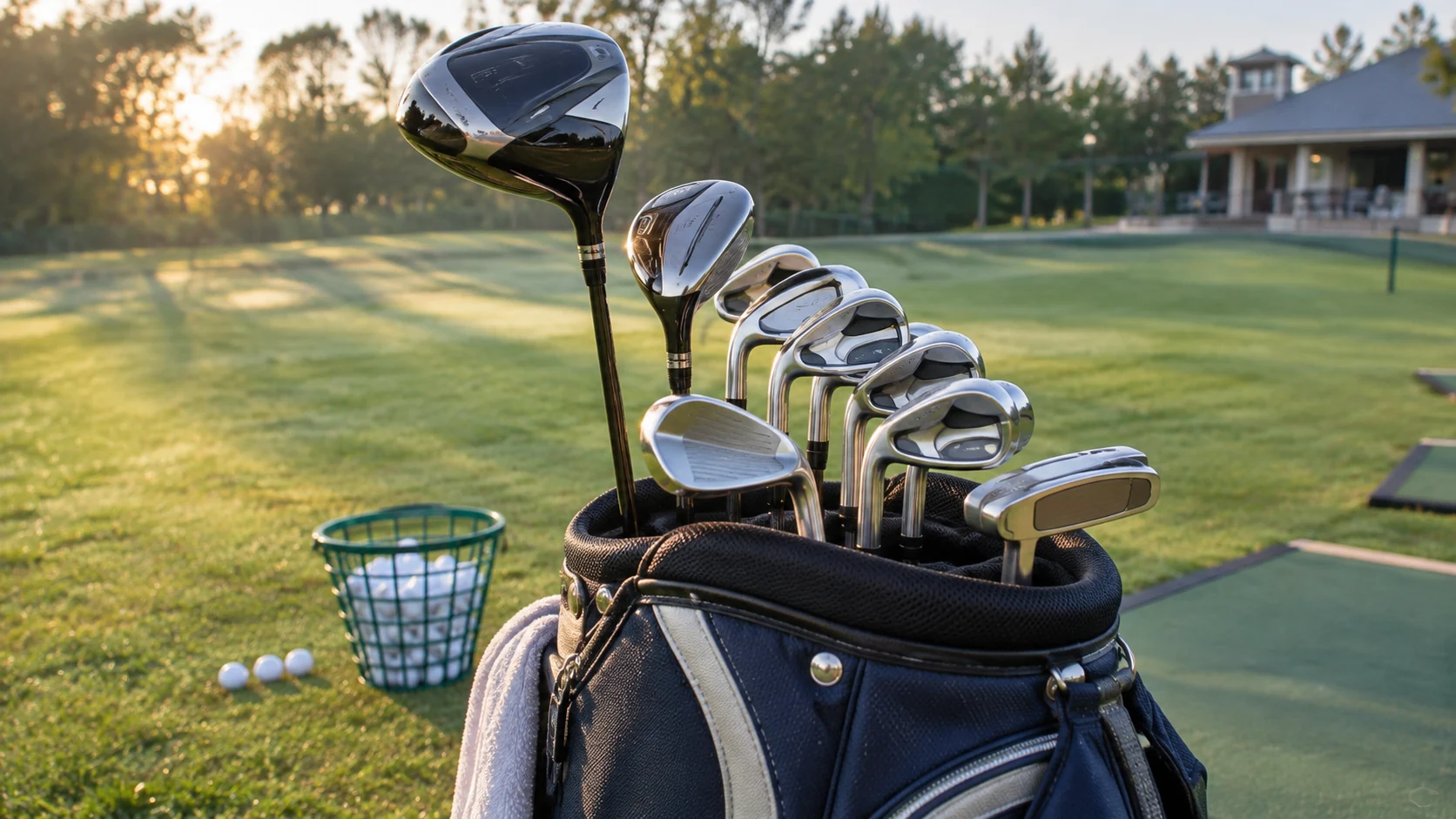
Buying your first golf clubs should be one of the fun parts of getting into the game. Unfortunately, it often feels like sitting an exam you did not study for. You see drivers with different lofts, irons labeled with unfamiliar numbers, shafts in several flexes, and complete sets that cost anywhere from a few hundred dollars to well over a thousand.
The good news is that your first set does not have to be perfect. It needs to let you learn the game, make reasonable contact, cover the shots you are likely to face, and avoid spending money on clubs you cannot yet use.
A beginner who buys ten sensible clubs and takes a few lessons may be far better equipped than someone who purchases fourteen expensive clubs based on recommendations from a friend. The important question is not what equipment looks impressive. It is what belongs in your first bag.
Start with fewer clubs than you think you need
Under the Rules of Golf, you may carry a maximum of fourteen clubs during a round. You can carry fewer. Nothing about being a serious golfer requires filling every slot immediately.
For a new player, a compact set can make practice simpler. Fewer clubs means fewer choices and more opportunities to become comfortable with each one.
A practical starting arrangement might be a driver or dependable alternative tee club, a hybrid, a six- or seven-iron, an eight-iron, a pitching wedge, a sand wedge and a putter. That is an example, not a required shopping list. A packaged beginner set may include a slightly different mix, and that is fine.
What matters is having a club for tee shots, a club for longer shots from the grass, one or two clubs for approach distances, something suitable around the green, and a putter.
You can add a fairway wood, more irons, or another wedge once you know which distances your existing set cannot cover.
What each club does, without the sales language
Driver: your longest tee club
A driver has a large head and a long shaft. It is built to launch the ball a long distance, typically from a tee. That length and low loft can also make it difficult to control when you are learning.
If you regularly miss the ball with the driver or have no idea where it will finish, using a shorter club from the tee for a while is sensible. There is no rule requiring you to hit driver on every par four or par five.
When you do buy one, look for a reasonably forgiving head and a loft that gives you usable height. More loft can help some beginners carry the ball farther than a lower-lofted driver that launches too low. Our guide to choosing driver loft explains why the number on the head is only a starting point.
Fairway woods and hybrids: long shots you can get airborne
Fairway woods and hybrids cover distances beyond your middle irons. For many beginners, a five-wood or hybrid is more approachable from the turf than a low-lofted three-wood or traditional long iron.
A hybrid's relatively wide head and low center of gravity can help some players launch the ball. But it is not automatically easy for everyone. Try one before buying if you can. Watch whether the ball takes off with enough height to carry a reasonable distance, not merely whether it rolls a long way along the range.
Irons: the clubs you will learn to rely on
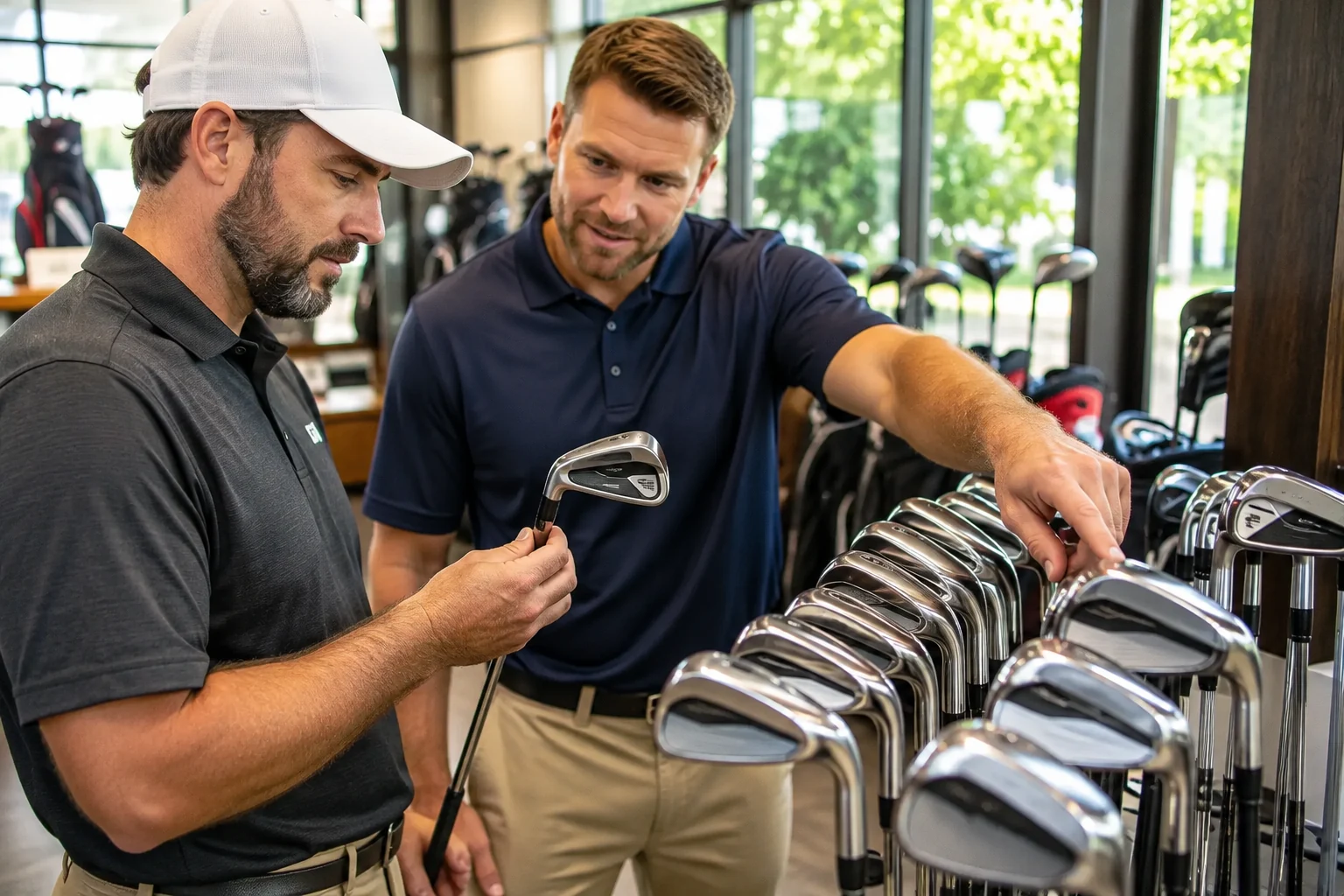
Irons are used for approach shots and a great deal of practice. A beginner generally benefits from exploring game-improvement or forgiving cavity-back designs rather than compact, traditional muscle-back blades.
This is not a judgment about skill. It is about reducing the penalty for the ordinary strikes that happen while you are learning. Our detailed blade versus cavity-back iron comparison explains how clubhead construction affects those misses.
Do not be surprised if a club labeled seven-iron has a different loft from another manufacturer's seven-iron. Club numbers are not identical across brands. Compare the results rather than the badge.
Wedges: getting on the green without drama
Your pitching wedge can handle shorter approaches and a variety of basic shots near the green. A sand wedge provides a different loft and sole shape and can help in bunkers and softer lies.
You do not need to start with three or four specialty wedges. First learn how far your pitching wedge travels on a comfortable swing and how to make a short chip with consistent contact. Add another loft when a real distance gap becomes obvious.
Putter: the club you may use most often
A putter does not have to be expensive. It needs to sit comfortably at address, help you aim, and make it easier to roll the ball at a predictable speed.
Try both a larger mallet and a traditional blade-shaped putter if available. Spend some time hitting long putts as well as short ones. A design that feels good from three feet but is difficult to control from twenty feet deserves another look.
Package set, used clubs, or individually selected clubs?
There are three realistic ways to buy a first set. Each can work well, and each has tradeoffs.
| Buying approach | Best reason to consider it | Main thing to watch |
|---|---|---|
| Complete beginner package | Convenience and a coherent basic set | Shaft, length and included club selection may not suit everyone |
| Used set | Better equipment for a smaller budget in some cases | Wear, altered specifications and counterfeit or damaged clubs |
| Individual clubs | Freedom to choose around your actual game | Total cost and poorly matched distance gaps |
When a packaged set makes sense
A beginner package can remove a lot of guesswork. The clubs are selected to work together, the bag is often included, and you can start playing without comparing a dozen brands.
Look carefully at what you are actually getting. A package with a driver, fairway wood, hybrid, a handful of irons, two wedges, and putter may be a better starting point than one that advertises the highest number of pieces by counting headcovers and accessories.
Check whether the clubs come in a length and shaft configuration suitable for you. A basic set that is uncomfortable to swing may not represent good value, even at an attractive price.
When buying used can save you money
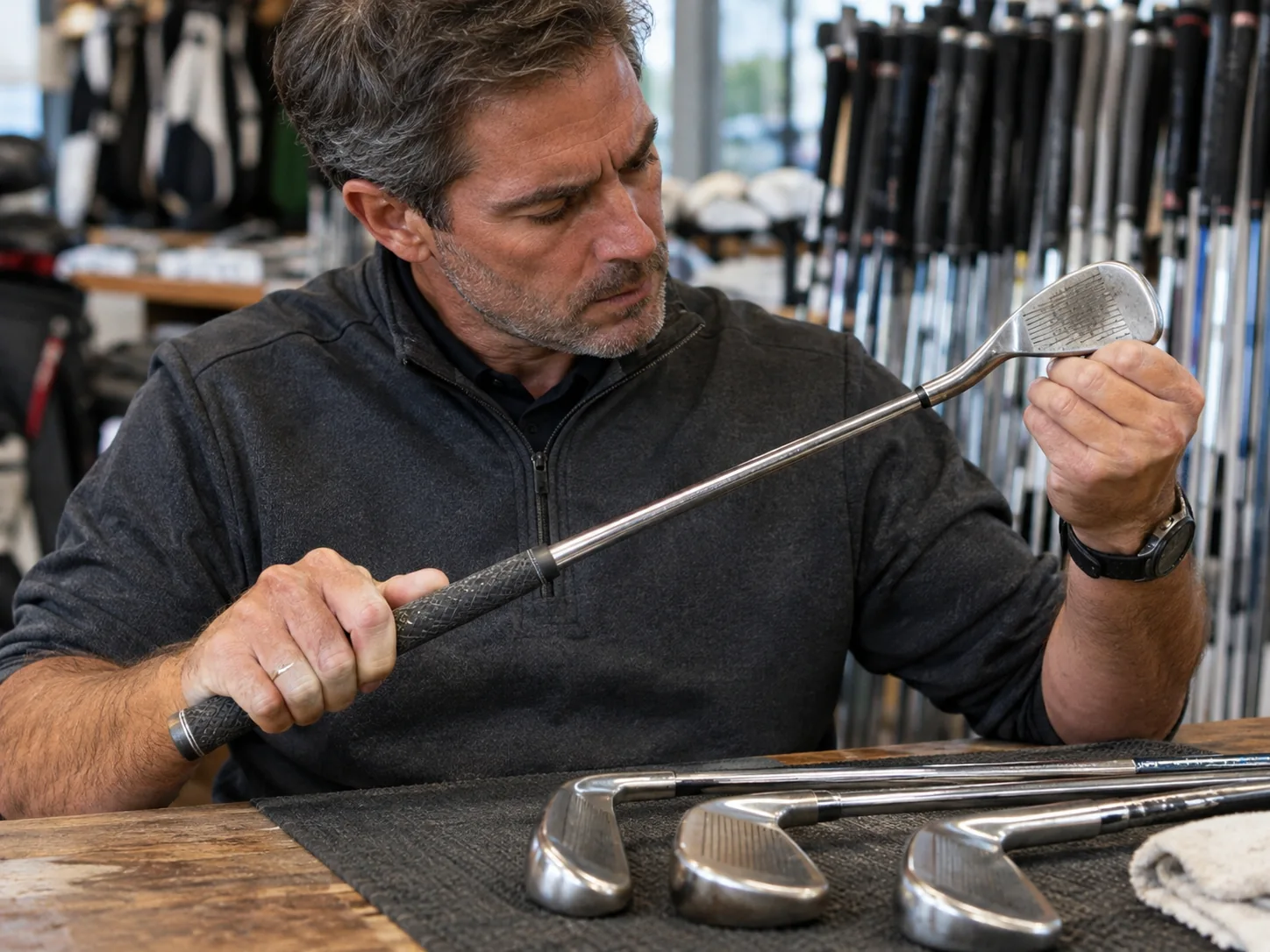
Used golf clubs can be excellent purchases. Good heads and shafts do not become useless merely because a newer model arrives. But inspect the equipment, and understand what you are buying.
Pay attention to the following details:
- Clubheads: Ordinary cosmetic scratches are expected. Cracks, dents in critical areas, loose weights, and separated parts are not.
- Shafts: Look for cracks, bends, peeling composite layers, and evidence of questionable repairs.
- Grips: Slick, hardened or badly worn grips may need replacement. Factor that cost into the purchase.
- Specifications: Ask whether a set has been shortened, lengthened, bent for lie angle, or reshafted.
- Set makeup: Verify which irons are actually included. A missing seven-iron is not a minor detail.
- Seller and returns: Buy from someone who will provide clear photographs and a reasonable description. Understand the return terms before paying.
Avoid assuming a club is genuine simply because the listing includes a familiar brand name. If the price is unusually low and the seller cannot establish the club's origin, exercise caution.
When individual clubs are a good idea
Buying one club at a time makes sense when you already know what you want to improve. Perhaps your current set is fine but your longest iron is too difficult. Adding a hybrid may solve the problem without replacing everything else.
For someone entirely new, however, buying a bag piece by piece can create unnecessary cost and overlapping distances. Do it only if you have a clear plan or useful fitting advice.
How much should you budget?
There is no magic dollar amount that makes a beginner set good. Prices change, and the used market varies by region and condition. A better approach is to make a complete starting budget before you compare clubs.
Remember that golf requires more than clubs. You may need a bag, balls, tees, a glove, shoes suitable for the course, range sessions, green fees, and possibly an introductory lesson.
For example, imagine you have a fixed amount available for getting started. Spending all of it on the set means you may have no money left to practice or play. Set aside a meaningful portion for actually learning the game. A perfectly good set that never leaves the garage is not good value.
If you are deciding whether a premium set is worth buying, start with how to choose the right clubs for your game. The same decision process applies to inexpensive equipment and expensive equipment.
Shaft flex and weight: do not choose by ego
Beginner clubs often come with a regular or lightweight shaft option, but those labels alone do not tell you whether a club fits.
A shaft that is too heavy for your comfortable swing may make the club difficult to control. One that feels excessively light may make timing harder for another player. Flex labels are not standardized across every manufacturer, so a regular shaft in one line may feel noticeably different from another.
If you are curious about the difference, read our regular versus stiff shaft guide and steel versus graphite shaft guide. You do not need to understand all the engineering before buying a first set. You do need to notice whether a club feels manageable and produces reasonable contact.
Club length and grip size can matter immediately
Very tall or short golfers may find that a standard-length set encourages an uncomfortable posture. But height alone is not a complete fitting measurement. Arm length, body proportions, setup and delivery all contribute.
If the clubs look markedly too long or too short, have a qualified professional check before buying. A basic length and lie assessment is more useful than guessing from a height chart.
Grip size matters as well. You should be able to hold the club securely without squeezing excessively. A grip that is too large or small for your preference can make the club uncomfortable, although changing the grip is not a dependable cure for a slice or hook.
The five-minute shop test before you buy
You can learn a lot without a full custom fitting. If a shop lets you try the clubs, use a short comparison rather than just taking two practice swings and admiring the finish.
First, hit a few balls with a comfortable middle iron. Pay attention to whether the head sits naturally behind the ball and whether the club feels balanced. Make several normal swings. Do not try to impress the person watching.
Next, try a longer club, preferably a hybrid or fairway wood. Can you lift the ball from the hitting surface with a normal swing? Is there an obvious miss that happens repeatedly?
Finally, try the putter for both short and longer distances. Does the head aim naturally to your eye? Can you roll the ball near a target without a lot of forced adjustments?
You are not looking for perfection. You are looking for a set that lets you learn without fighting obvious equipment problems.
A beginner's first month with new clubs
Your purchases become more useful if you have a simple plan for learning them.
Week one: Learn a comfortable grip, setup and basic contact with a middle iron. Start with short swings rather than full-speed efforts.
Week two: Add your pitching wedge and simple short-game shots. Practice rolling putts toward different distances on the green.
Week three: Introduce the hybrid or fairway wood from the ground. Use the driver briefly, but do not make the session a marathon of full-speed tee shots.
Week four: Play a short course or a quiet round with a simple goal. Identify which clubs you use confidently and which ones require more practice.
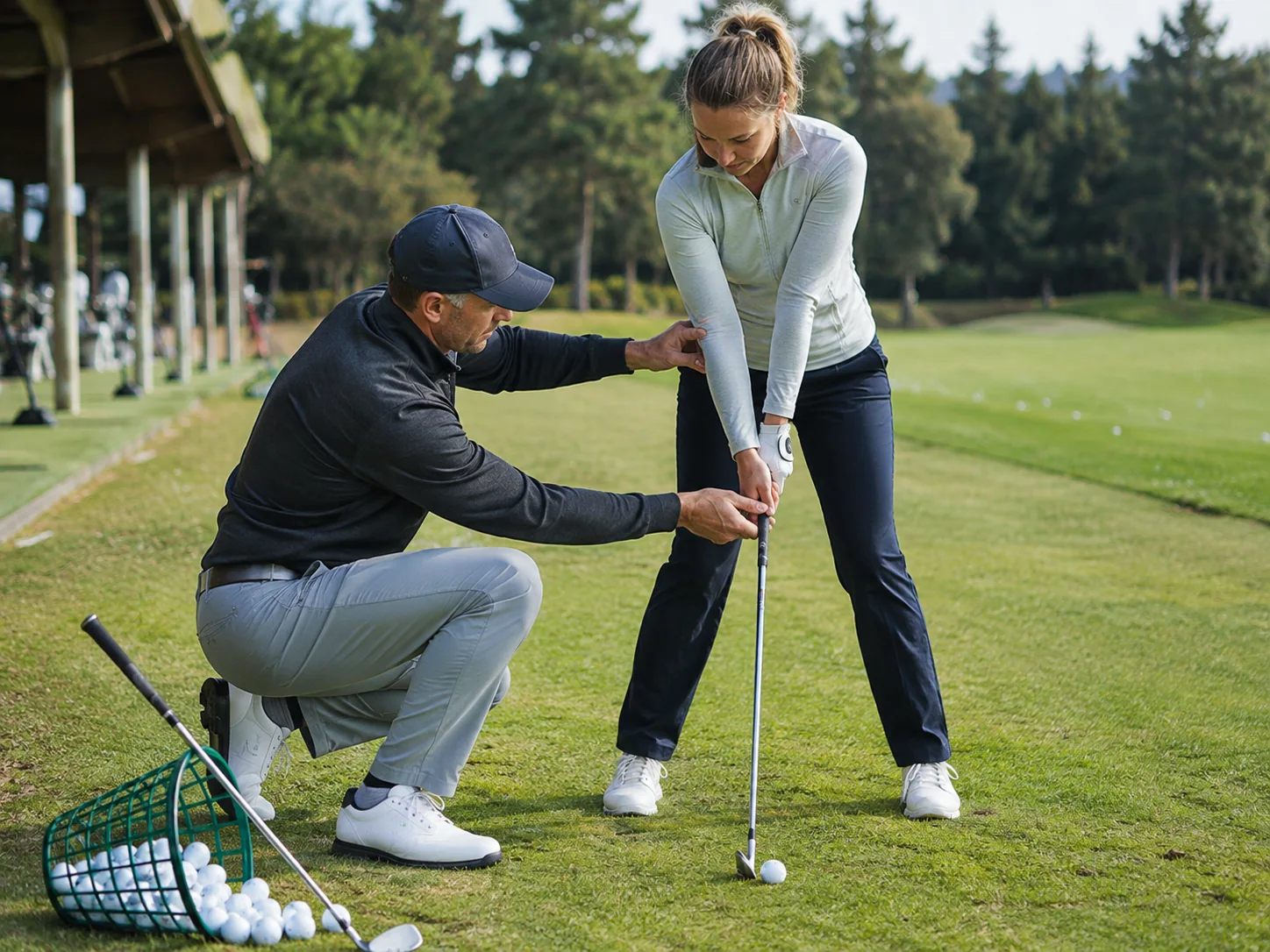
That is a sample progression, not a guarantee that you will be playing consistently after four weeks. A lesson from a qualified instructor can make the work more focused.
Common first-set mistakes
Buying the most difficult irons because they look better
A compact muscle-back iron may look beautiful, but the appearance does not compensate for losing substantial distance on repeated off-center strikes. Start by testing forgiveness, not status.
Choosing a driver with very little loft
Some beginners believe low loft equals more distance. For a golfer who struggles to get enough launch, a low-lofted head may produce less carry, not more. Try different lofts with normal swings.
Paying for clubs instead of practice
Equipment supports learning; it does not replace it. Protect enough of your budget for range sessions, rounds and instruction.
Buying fourteen clubs because the rules permit fourteen
A fourteen-club limit is a maximum, not a target. More clubs can mean more choices without any additional useful shot.
Ignoring a damaged or badly worn used set
Scratches are common. Structural damage is a different issue. Inspect before paying, and remember that regripping several clubs can change the real cost.
Taking distance claims at face value
A single long simulator shot does not establish how a club will perform across a round. Look for repeatable contact, ball flight and useful carry distance.
Questions beginners ask before buying
Do I need men's or women's clubs?
Choose clubs for your body, strength, speed, setup and comfort rather than assuming the marketing category will always fit. Those categories can provide starting specifications, but they are not fitting rules.
Can I start with secondhand clubs?
Yes. A sound, appropriately fitted used set is often a sensible way to begin. Inspect the condition and avoid equipment with unknown damage.
Is a hybrid easier than a long iron?
Many beginners find a hybrid easier to launch, but not everyone. Compare actual strikes before buying.
When should I upgrade?
Upgrade when you can identify a real limitation in the club, such as poor fit, an uncovered distance, damage, or consistent launch problems. Do not set an arbitrary upgrade date.
Is professional club fitting worth it for a beginner?
A basic assessment can identify obvious problems with length, lie, grip or shaft weight. An expensive, highly detailed fitting may make more sense after your contact becomes somewhat repeatable. The appropriate level of fitting depends on the player.
Your first set should help you get onto the course
The best beginner purchase is a set that makes golf less complicated. You should be able to recognize what each club does, reach common distances, and practice without feeling as though every imperfect swing is punishment.
If a packaged set meets those needs, there is nothing wrong with choosing it. If a carefully inspected used set fits your budget and swing, that may be even better. Either way, leave money and time for the part that actually develops your game: hitting shots, learning from them, and playing golf.
You can always add another club later. You do not have to buy your entire golfing future on day one.