

Steel vs. Graphite Shafts: Which Is Right for You?
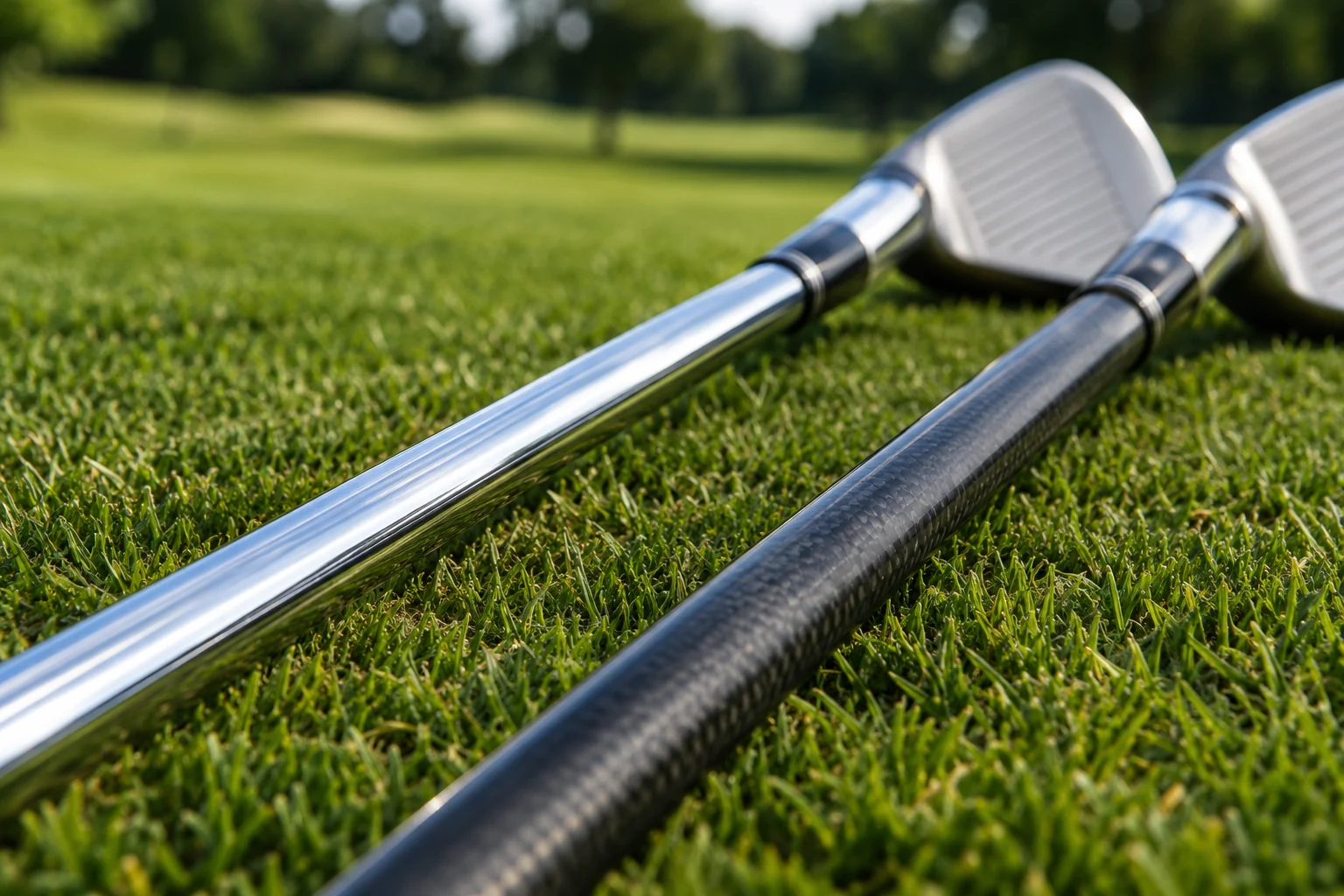
A golfer can stand in front of two nearly identical seven-irons and feel a surprising difference before hitting a single ball. One has a polished steel shaft. The other has a dark graphite shaft. Pick them up and the balance, weight, and feel may be noticeably different, even when the clubheads are the same.
That is why the old advice to choose steel if you are serious about golf and graphite if you need more distance is not especially useful. It overlooks what matters when a club is moving: how easily you can swing it, how reliably you find the center, and how predictable the ball is when it leaves the face.
The real choice is not between a material for good players and one for everybody else. It is between particular shafts that may suit your body, tempo, and shot pattern differently.
What are steel and graphite shafts actually made from?
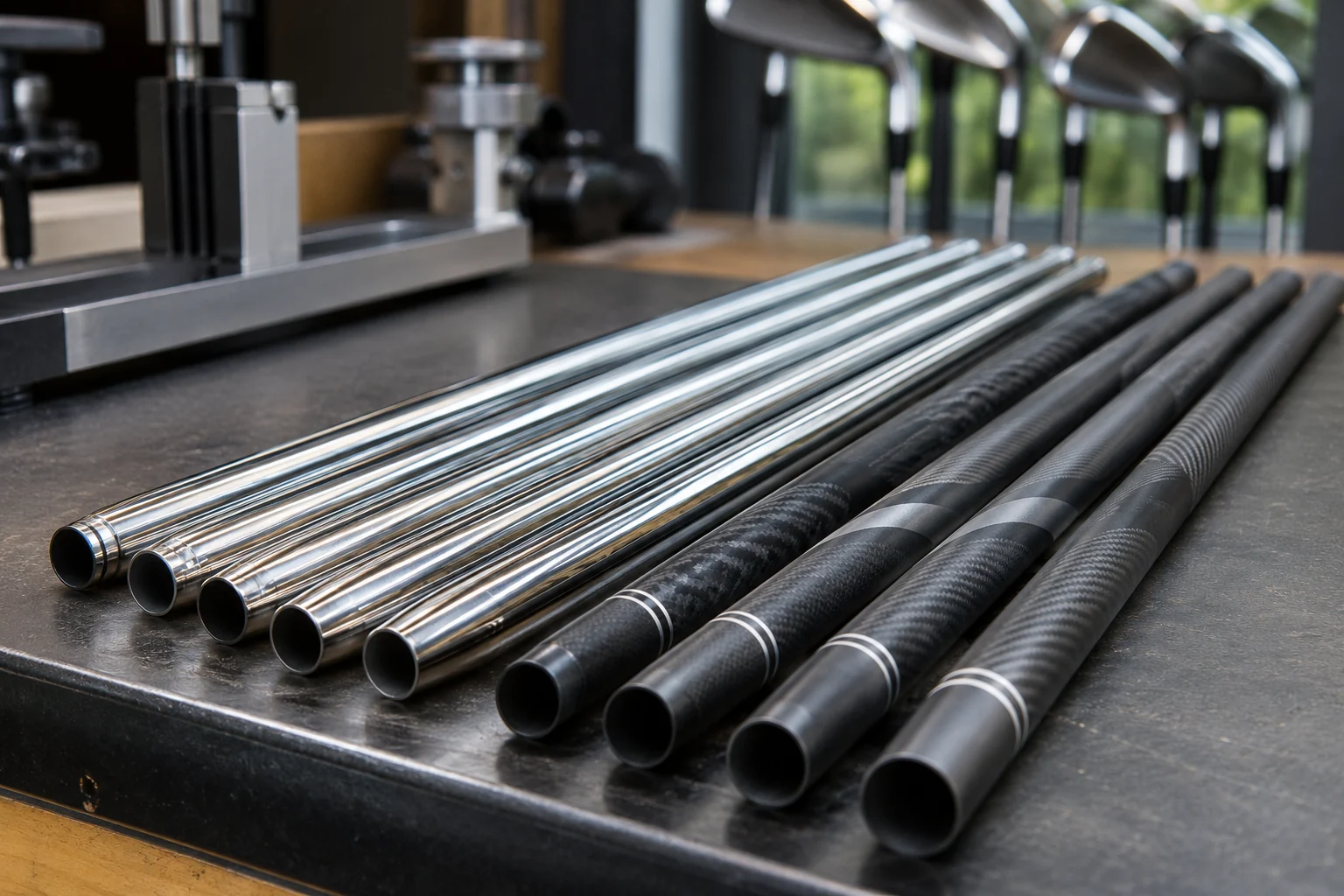
A steel golf shaft is a hollow metal tube formed and shaped to create a particular weight and bending profile. Graphite shafts use layers of carbon-fiber composite material, with fibers positioned and oriented to create the designer's intended characteristics. Both can be produced with different weights, stiffness profiles, and balance points.
Steel has traditionally been common in irons and wedges, while graphite is familiar in drivers, fairway woods, and hybrids. That division has become less absolute as graphite iron shafts have improved and more manufacturers have introduced lighter steel models.
The shaft material is only one part of the design. A heavy graphite shaft can feel more substantial than lightweight steel. Two graphite models with similar total weight can bend differently and create different sensations during the swing.
The comparison that matters on the course
| What you notice | Steel shafts | Graphite shafts |
|---|---|---|
| Available weights | Many midweight and heavier options, plus lighter designs | Very broad range, including light and substantial options |
| Impact vibration | Often a sharper sensation | Composite construction can damp some vibration |
| Familiar uses | Irons and wedges | Woods, hybrids, and increasingly irons |
| Control | Depends on fitting and strike | Depends on fitting and strike |
| Distance | Depends on speed, launch, and quality of strike | May improve if a suitable design helps speed or contact |
| Best golfer | No single profile | No single profile |
These are tendencies, not a promise that all shafts made from one material will behave alike. In fact, the differences within either material group can be enormous.
Weight can change more than the shaft's feel
If you have ever swung a club that seemed to take extra effort just to get moving, you understand why weight deserves attention.
A shaft that is too heavy for your preferred motion can make it difficult to maintain a natural rhythm. A golfer might start forcing the downswing, making the handle work harder, or losing comfortable speed late in a round. A much lighter shaft can feel wonderfully easy to accelerate, yet another golfer may find it difficult to sense where the head is during transition.
Neither outcome is guaranteed. The point is that weight affects how the golfer responds.
Imagine testing two otherwise similar seven-irons. One feels comfortable for the first five swings, but by the twentieth you begin to hurry and miss the center. The other feels lighter and remains easy to swing. If carry distance and direction also improve, that is a useful finding. But if the lighter one produces erratic contact because it disrupts your timing, the weight saving is not a victory.
Total weight is not the same as swing weight
Total weight is how much the assembled club weighs. Swing weight is a measurement of the club's balance around a specified fulcrum. It is not a direct measurement of the clubhead's actual mass, and two clubs with identical swing-weight readings can feel different because their overall weights and mass distributions differ.
Changing shafts can shift the club's balance even if you keep the same head and grip. A well-executed fitting considers the club as an assembled system rather than treating a shaft as an isolated upgrade.
Does graphite automatically make you hit the ball farther?
No. A lighter graphite shaft may allow some players to generate more speed or make better contact. But there is nothing magical about the material that adds yards to every shot.
Consider a golfer whose seven-iron speed increases with a lighter shaft but whose strike moves from the middle of the face toward the toe. The extra clubhead speed may not translate into better ball speed or carry. Another golfer may gain both speed and center contact, producing a useful improvement.
There is also the matter of where the ball comes down. For an iron, a longer shot is not always the better shot. A ball that flies lower and lands flatter may be less useful on a firm green than one that carries slightly less but comes down steeply enough to stop.
Compare several normal swings, not one exceptional strike. Track carry, launch, spin where reliably measured, and the spread of the shots. If you are buying an entire set rather than changing shafts, start with how to choose the right golf clubs for your game so the head and distance gaps are considered too.
Can steel really be more accurate than graphite?
The idea that steel is straight and graphite is wild belongs to an earlier, much simpler conversation about shaft choices. Modern graphite designs can be built to precise specifications and are used by skilled players who demand consistent performance.
A shaft can influence how a golfer delivers the club, but material alone does not decide where the ball goes. Clubface orientation, swing path, strike location, loft, speed, and the complete club setup all matter.
A useful comparison is to hit ten or more typical shots with each shaft and look at the pattern. Did the graphite option leave the ball spread across thirty yards while steel grouped more tightly? Or did the graphite produce a smaller pattern because you found it easier to return the club to the ball? The answer is individual and has to be measured.
One of the easiest fitting mistakes is to compare two different shafts attached to two different iron heads. That changes too many variables at once. When possible, hold the clubhead model, loft, length, and grip consistent so you can understand what the shaft is doing for you.
Why do graphite shafts often feel softer at impact?
The word soft can mean several things in golf. A player may be talking about shaft bending, the sensation at impact, or the sound of the clubhead meeting the ball. They are not the same thing.
Graphite's composite construction can damp some impact vibration compared with many traditional steel designs. Some golfers appreciate a less harsh sensation on mishits. That can be particularly appealing if sharp vibration makes practice uncomfortable.
It does not mean graphite prevents injury, treats joint conditions, or suits every golfer with discomfort. Grip pressure, clubhead design, the ball, and the way you strike it can all influence feel. If playing causes persistent pain, equipment changes should not substitute for appropriate medical assessment.
Also remember that some golfers actively prefer the sharper feedback of steel. They like how a solid strike and a slight mishit feel different. Others can identify strike location just as well with graphite using ball flight or impact spray. Neither preference proves one material is universally better.
Flex and material are separate decisions
A common misunderstanding is to assume graphite shafts must be flexible and steel shafts must be stiff. Both statements are false.
Graphite shafts are produced in firm profiles. Steel shafts are available in softer and lighter configurations. A regular graphite model from one brand might feel firmer than a stiff steel model from another, depending on length, weight, and how those particular shafts are built.
That makes a flex label a poor shortcut. Our regular versus stiff flex guide explains why the letters cannot be compared blindly across companies.
In practice, ask the fitter for the exact shaft model and weight, not just whether it says R or S.
What about torque and bend profile?
Manufacturers often publish a torque specification. It describes resistance to twisting under particular test conditions. Higher and lower figures may influence feel, but numbers from different manufacturers are not always measured in equivalent ways.
A shaft's bend profile describes how stiffness is distributed along its length. One model may be firmer toward the tip, another in the middle, and another toward the handle. Those profiles can affect how a shaft feels during transition and impact, and potentially affect delivery for some golfers.
Avoid buying based on phrases such as high kick point or low torque without seeing the results. They can be helpful design descriptions, but they are not guarantees of low flight, straight shots, or extra distance.
How the decision changes from driver to irons
Graphite dominates modern drivers because it permits designers to build long, relatively light shafts with a wide range of profiles. But even among driver shafts, the right weight is not automatically the lightest available. Some players gain control and usable distance with more substantial options.
Irons are where steel versus graphite becomes a more visible decision for many golfers. A full iron set repeats similar motions across different lengths and lofts, making weight, balance, and comfort important. Lighter graphite iron shafts may be worth considering if you struggle to maintain speed or find the club tiring to swing. Steel and heavier graphite can also perform very well if you prefer a more substantial feel.
For wedges, some golfers continue with the same shaft family as their irons. Others prefer a different weight or profile because many wedge shots are played at partial speed. A sudden weight change between a pitching wedge and the next wedge can be distracting, so check the transition before buying.
Could you mix steel and graphite in one bag?
Certainly. Almost every bag with a graphite-shafted driver and steel-shafted irons already does.
Some golfers also use graphite in their long irons and steel in shorter irons. That can work, but it needs thoughtful setup. The change in length, weight, and balance across adjacent clubs should not make one iron feel completely unrelated to the next.
Test the carry gap between the two models and check whether your normal transition stays consistent. It is better to make the choice because it covers a real shot or improves comfort than because a mixed set sounds technologically advanced.
A useful testing routine before paying for new shafts
You do not need to know every engineering term to compare shafts well. You need a fair test.
- Warm up with your own club and establish a baseline using normal swings.
- Try at least two shaft weights, not merely two flex labels.
- Keep the head and other specifications as close as practical.
- Hit enough shots to include ordinary slight mishits, rather than deleting every imperfect strike.
- Alternate the candidates so one does not benefit from your swing becoming more comfortable.
- Compare the distribution of carry distances, direction, and contact location.
- Think about the final few swings, when fatigue or frustration can reveal a fit that felt fine at first.
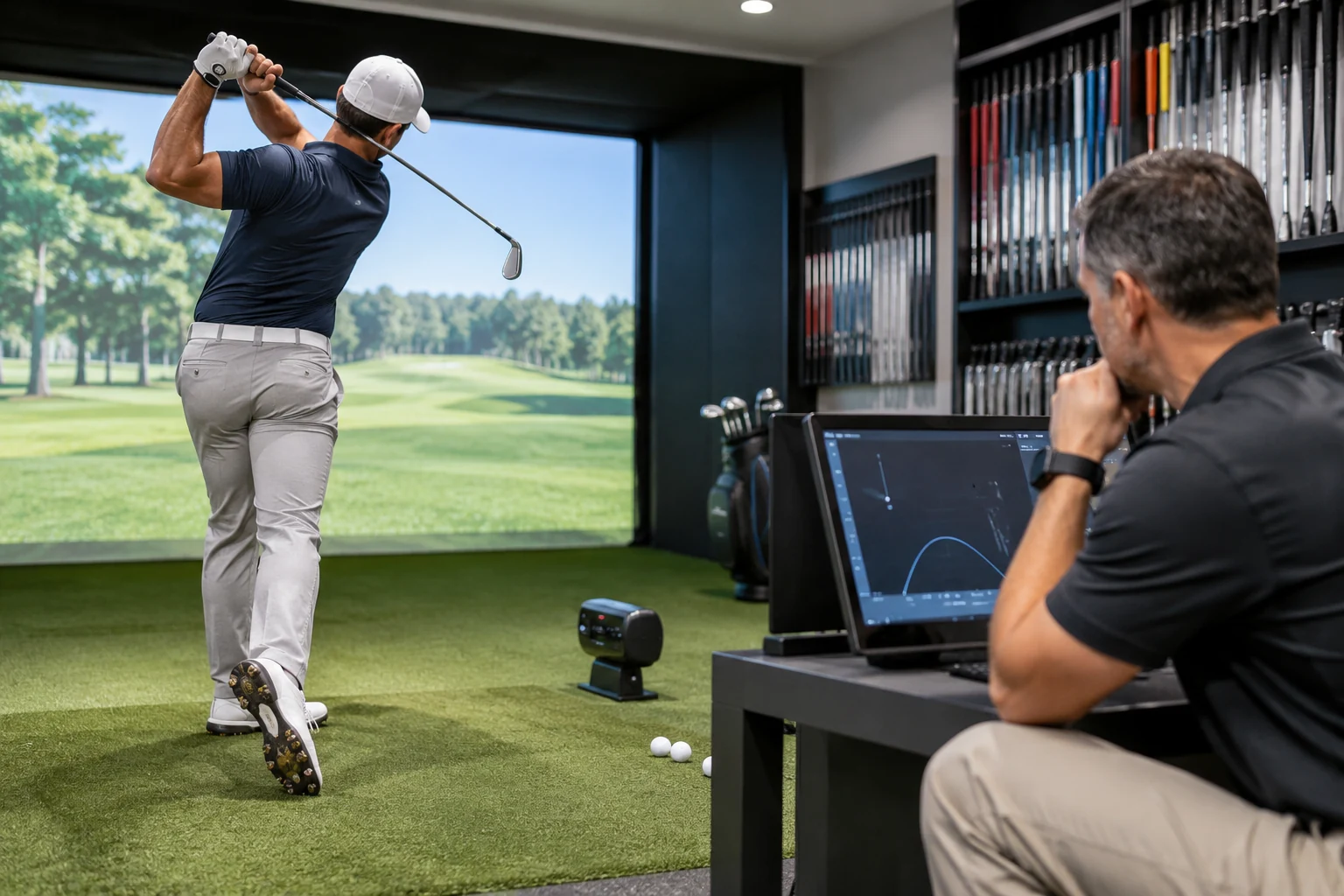
A launch monitor can provide valuable measurements, but your preferred shaft should also feel reasonable when swinging outside a fitting bay. If possible, take the leading candidate to the range and then onto a course.

Mistakes that make a shaft purchase disappointing
Buying by material alone. Switching to graphite without checking weight and construction may simply trade one poor fit for another.
Chasing a speed increase without watching contact. More clubhead speed means little if ball speed and playable carry do not improve.
Comparing completely different clubheads. You cannot isolate the effect of a shaft if loft, head design, and length all change.
Treating a flex letter as universal. A regular shaft in one model may not match another brand's regular.
Ignoring the price of rebuilding an entire set. Reshafting includes labor, grips, and potentially changes in balance. Sometimes a different used or fitted set makes more financial sense.
Who should start by testing each material?
| Your situation | First comparison worth trying |
|---|---|
| Heavy irons feel tiring during a full round | Your current shaft against a lighter steel and graphite option |
| Mishits produce unpleasant vibration | A suitable graphite model against your current club |
| You consistently strike your steel irons well | Keep steel in the comparison; a change may not help |
| You lose awareness of a very light clubhead | Heavier graphite or steel with a comfortable balance |
| You need predictable wedge distances | Compare weight and feel across the iron-to-wedge transition |
| You are replacing a whole set | Fit head, shaft, and distance gaps together |
These are sensible starting tests, not fixed prescriptions.
Common questions
Is graphite only for older or slower players?
No. Graphite shafts cover a wide range of weights and profiles. Age is not a reliable substitute for an actual fitting.
Do professional golfers use graphite iron shafts?
Yes, some do. Others prefer steel. Their equipment choices are based on performance and preference, not a rule about playing ability.
Will graphite stop my slice?
Not by itself. A shaft can influence feel and delivery, but a slice requires understanding impact conditions, especially face direction relative to swing path.
Is steel more durable?
Both materials can last a long time when properly used and cared for. Inspect either material for cracks, dents, splintering, or damage, and have any suspicious shaft evaluated rather than continuing to play it.
Should I switch all my irons at once?
Not before testing a representative club. Confirm that the shaft produces useful results and that a complete set will maintain sensible weight, balance, and distance progression.
The decision to take onto the course
If your current steel shafts feel natural and your shots are predictable, there is no reason to change merely because graphite is available. If lighter or different-feeling graphite helps you swing comfortably, find the middle more often, and maintain tighter carry distances, that is a genuine reason to consider it.
The winner is not steel or graphite. It is the shaft you can deliver consistently over eighteen holes.