

How to Find the Right Driver Shaft Length
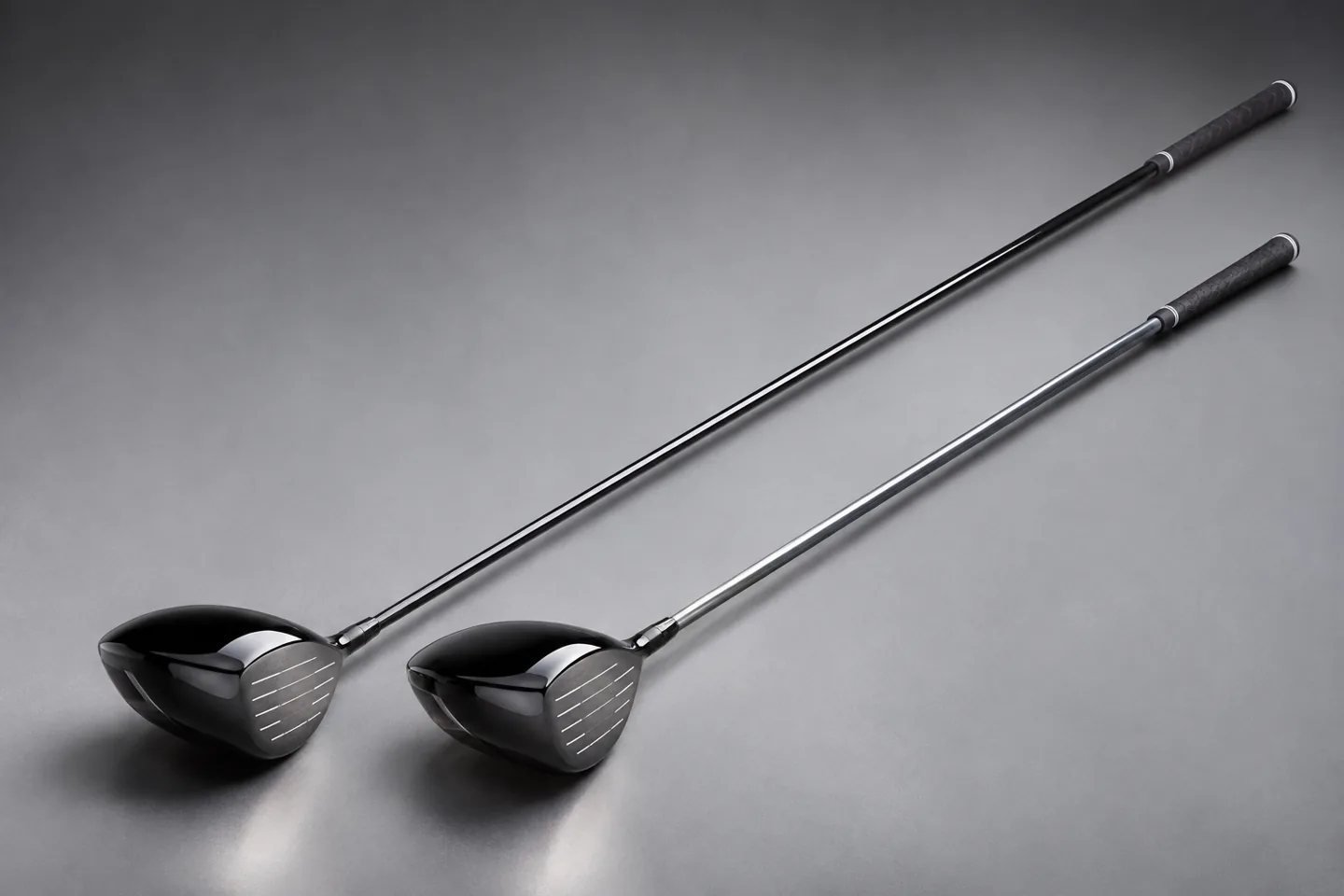
A driver that measures 45.75 inches looks perfectly ordinary in a golf shop. On the first tee, those extra inches can feel like quite a lot when you're trying to find the middle of the face.
Before spending money on a replacement driver, take your current one to the range and examine where you're striking the ball. Shaft length is one of the equipment variables you can investigate without buying anything.
Start with the strike marks
Use a little removable impact spray designed for golf clubs. Hit ten drives with your normal setup and inspect the pattern. Pay particular attention to how far the strikes spread from heel to toe. A scattered pattern makes it hard to preserve ball speed and predict curvature.
Now grip down an inch and repeat the exercise. Don't consciously slow down or change your swing. Use the same tee height and ball position, and alternate between the two grips after warming up.

If the shorter grip brings the marks into a tighter group, measure carry and dispersion next. You may have found a way to improve your driving without changing your swing.
What an extra inch actually does
A longer club increases the potential radius of the swing. With suitable delivery, that can increase clubhead speed. The problem comes when a golfer loses control of the strike.
Ball speed and launch conditions determine much of the distance you see downrange. A faster swing with an inefficient strike can produce a shorter drive. Heel and toe contact also influence curvature through gear effect.
Imagine these results from a fitting. They're hypothetical, included to demonstrate how to interpret your own measurements:
| Playing length | Club speed | Ball speed | Carry |
|---|---|---|---|
| 45.75 inches | 100 mph | 142 mph | 234 yards |
| 44.75 inches | 98 mph | 145 mph | 241 yards |
Here, the shorter club produces better ball speed despite lower club speed. A fitter should also examine launch, spin and the location of the misses before drawing a conclusion.
Don't let the longest drive settle the fitting
At a range, it's tempting to remember the shot that disappeared over the distant marker. The other nine drives deserve attention. Take the worst two or three reasonably representative strikes into account, especially if they would finish in trees or penalty areas.
Consider your home course. A drive that carries 235 yards consistently and stays within a manageable landing area could be considerably more valuable than an occasional 250-yard carry mixed with two lost balls.
Measure carry separately from total distance. Firm ground and a downhill landing area can exaggerate the apparent benefit of one club.
Measuring the club
Playing length includes the assembled head, shaft and grip. Measuring the exposed shaft alone won't tell you which driver length you own. Ask a club technician to measure it on a proper club-length ruler. Manufacturers sometimes use different measurement conventions, so compare clubs with the same method.
The USGA and R&A generally limit clubs other than putters to 48 inches. Committees can adopt Model Local Rule G-10, restricting those clubs to 46 inches. Those limits establish equipment legality, not an ideal fitting length.
Before you cut anything
Gripping down is useful for an initial experiment, though it doesn't reproduce a professionally shortened club exactly. The grip tapers, the unused portion remains above your hands, and the original head weight remains unchanged.
Removing length from the butt end changes the club's balance and usually reduces measured swingweight. A technician may consider head weighting, grip weight and the shaft manufacturer's trimming instructions. Adding head weight can change shaft response as well as total weight.
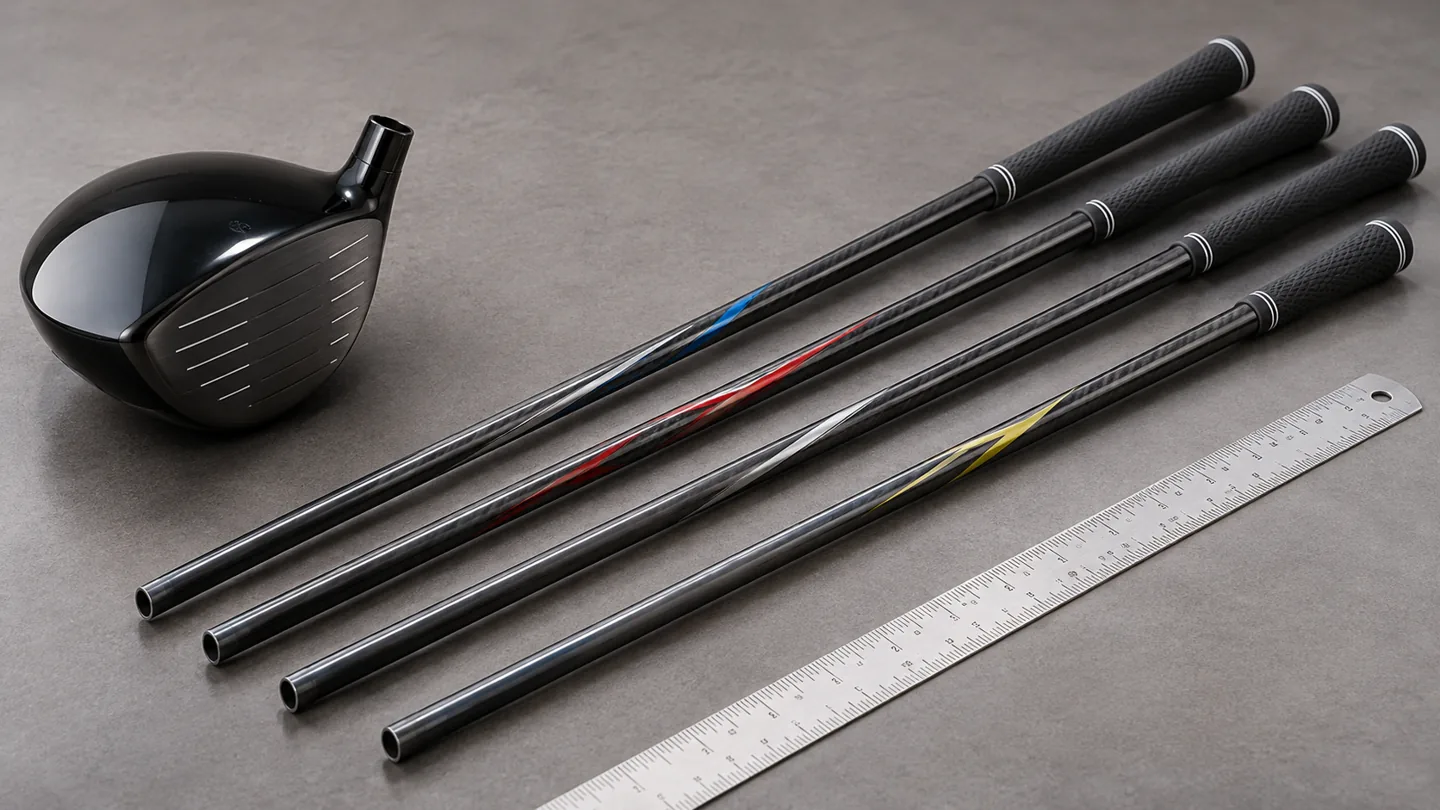
Don't cut the tip of your shaft as an improvised length adjustment. Tip trimming has substantial implications for shaft behavior, and adjustable adapter systems have their own installation requirements.
If your test produces promising results, ask a fitter for a shorter demonstration shaft. Test the assembled club before authorizing permanent work.
Height and the driver's length
A tall player doesn't automatically need an unusually long driver. Arm length, posture, delivery and comfort all matter. Driver fitting differs from fitting irons, where the sole's relationship to the ground is particularly important.
Watch what happens when you address the ball. If the shorter test club encourages a cramped posture or makes your usual contact worse, that's valuable evidence. There is no prize for choosing the shortest driver in the shop.
Your driver loft also deserves attention during a fitting. Better contact with a shorter shaft may change your launch and spin enough to justify revisiting the loft setting.
Take the experiment onto the course
Once you've identified a promising length, play several ordinary rounds with the test configuration. Record penalties, playable drives and the distances left for approach shots. Include the holes where you normally struggle.
A practical fitting decision should survive a difficult tee shot on the seventeenth hole, when you're tired and the fairway looks narrow. That's a better final examination than a handful of perfect swings in a simulator.